
What does wide distribution get you? A listing nobody can order, an ebook in stores your readers don't use, print availability with margins too thin to sustain, or sales you can track and repeat? That's the question most lists of book distributors for self publishers skip. They count logos. You should count outcomes.
Pick by goal first. Do you need Amazon sales, library and bookstore orderability, wide ebook reach, subscription economics, direct-to-reader sales, hands-on production help, or a full-service publishing partner? Each route below matches one of those jobs. Each also carries hidden labor, file preparation, fees, or margin trade-offs you need to price in before you upload anything.
Scale is why this choice matters now. Bowker reported that U.S. self-published titles carrying ISBNs exceeded 2.6 million in 2023, up 7.2% from 2022, and more than double traditionally published output. With that many competing titles, distribution isn't a back office task. It's whether buyers outside your own network can find, order, and pay for your book.
1. BarkerBooks
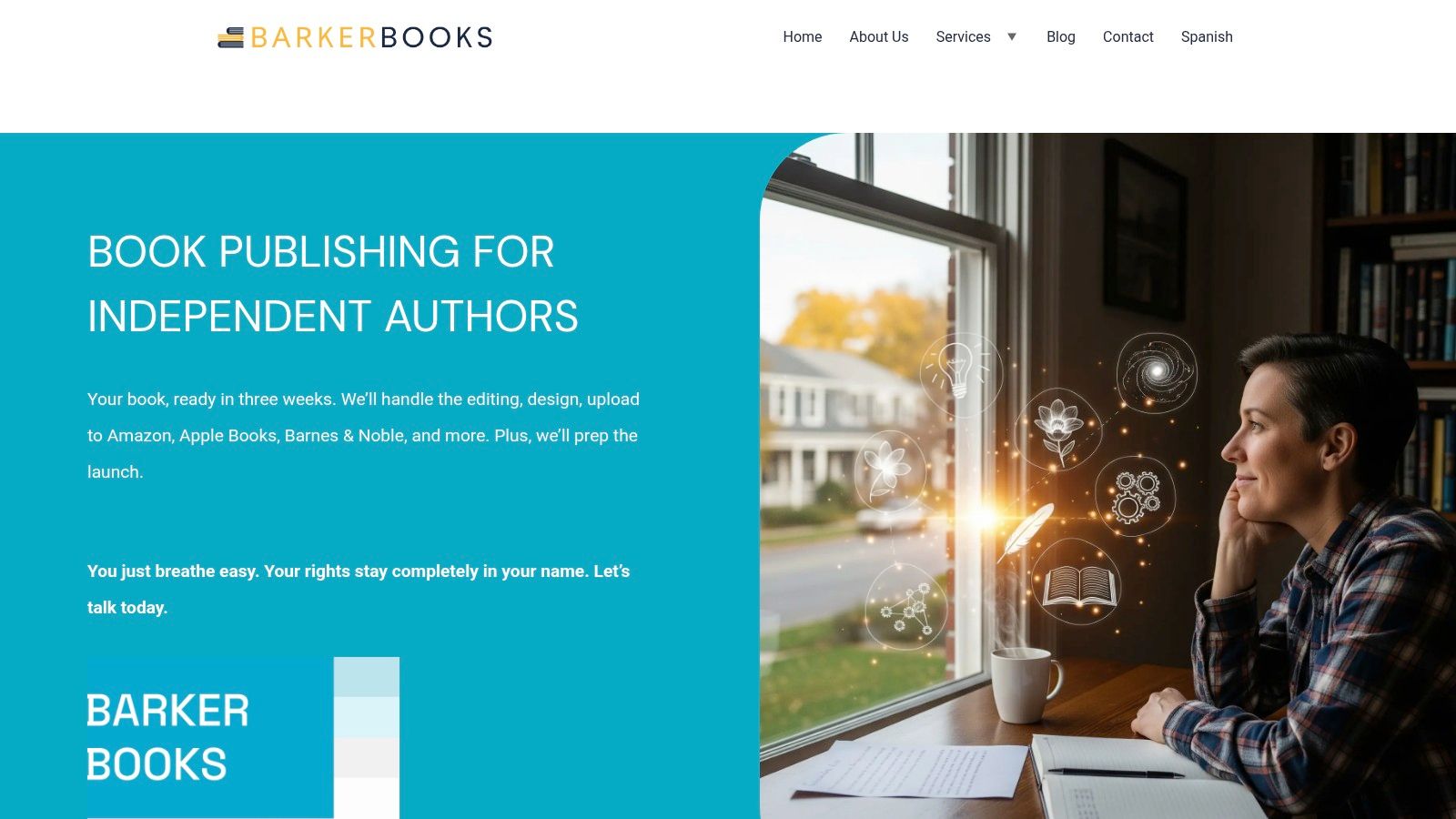
Choose BarkerBooks when your goal is a full-service publishing partner, the route for authors who'd rather hand off coordination than build a publishing stack themselves. You bring the manuscript, finished or in progress, and the team manages editing, design, distribution setup, and launch marketing around it.
The service list runs wide. Editorial covers manuscript development, proofreading, editing, ghostwriting, and author coaching. Production covers cover design, interior formatting, ISBN and copyright support, plus preparation for platforms like Amazon, Apple Books, and Barnes & Noble. Marketing includes Google and Meta ad campaigns and promotional videos, work you'd otherwise source from separate contractors.
Best for full-service and bilingual publishing
The differentiator is language and geography. BarkerBooks works with English and Spanish language authors, reports distribution reach across 91+ countries, and positions itself around Spanish language publishing. If you're releasing in two languages or targeting Spanish speaking readers, that focus beats bolting translation onto an English-only workflow. Check the company's global book distribution services page against the specific countries and retailers your title needs before signing anything.
You retain your intellectual property and royalties, so this stays assisted self-publishing rather than a rights buyout. Packages tier from Essential to Elite. Scope matters here: don't pay for ghostwriting on a finished manuscript, and don't strip out editing on an unfinished one.
Practical rule: Use a full-service partner when coordination is your bottleneck. If you can already produce clean print and ebook files alone, you're paying for labor you don't need.
The company advertises three-week publishing sprints where scope allows, defined fees per package, and a 90-day promise of additional work at no cost or credit if agreed metrics aren't met. It also reports a 4.9 average Google rating, more than 7,500 authors published, and an author community of 250,000. Treat those as self-reported figures and verify current numbers during your quote call.
Two limits to check upfront. Package prices aren't published, so you can't compare total cost against the DIY routes below until you request a quote. Timelines also flex with scope, and heavy ghostwriting or bilingual production will outrun a standard sprint.
- Pros: Coordinated editing, design, distribution, and launch marketing, rights and royalties retained, bilingual and international support
- Cons: No published package prices, sprint timing varies by project scope
2. IngramSpark
Choose IngramSpark for one job: making your print book orderable through the book trade. It's a print-on-demand and ebook platform connected to Ingram's wholesale network, so bookstores, libraries, schools, and online retailers can order through infrastructure they already use. No other option on this list matches that reach for a self-published title.
That reach is worth having. Print-on-demand is already the standard production method for most surveyed self-publishers, with 93% reporting they use it in the 2025 Selfpublisher Association survey. Orderability and demand are separate problems. A store that can order your book won't automatically stock it, display it, or hand sell it.
What you're actually paying for
What you get is an ordering path. Shelf placement is a separate job. You control metadata, list price, and wholesale discount, and those settings decide whether a retailer or institution can stock your book at a workable margin. Set the discount too shallow, or price without modeling print cost, and the listing exists on paper only. Run the platform's print and compensation calculators before you commit to a number.
If trade print sits at the center of your plan, compare this route with how a wholesale books distributor fits into a broader publishing setup. The deciding question is who contacts stores and libraries after the title goes live. With IngramSpark, that outreach work lands on you.
Orderable doesn't mean ordered. Budget real time for direct outreach to bookstores and librarians, or the wholesale listing will sit idle.
File preparation is the main friction. Print-ready files and setup are demanding for first-time publishers, and recent user reviews report customer service, file preparation, and production frustrations. Check the current setup and revision fees before you upload, and don't start here unless you can produce files to spec or you've hired someone who can.
- Pros: Strongest fit for bookstore and library print orderability, no upfront inventory, established trade network
- Cons: Demanding file prep, no guarantee of listing, orders, or promotion
3. Amazon Kindle Direct Publishing (KDP)
Are most of your readers already shopping on Amazon? Start with Amazon Kindle Direct Publishing. KDP is the simplest route for Amazon-first sales: there's no publishing fee or print inventory to buy, and one account handles Kindle ebooks, paperbacks, and hardcovers.
That convenience comes with a trade-off. KDP gives you direct access to Amazon, not broad non-Amazon distribution. If wide ebook reach is a goal, add other retailers through an aggregator or upload to them yourself. For general publishing advice for aspiring authors, focus on choices that fit your audience and budget.
Know the boundary of Expanded Distribution
Eligible paperbacks can use Expanded Distribution, but bookstores and libraries are not guaranteed to list or order them. Treat it as an extra route, not a bookstore strategy. If trade print ordering matters, choose a distributor suited to that goal rather than relying on Expanded Distribution.
KDP paperback royalties depend on the applicable royalty rate, list price, and printing costs. Calculate your costs before setting a price, and check how your cover and interior files meet KDP's specifications. For practical steps on selling your book on Amazon, prepare your metadata and product page before launch. Publishing through KDP is free, but file preparation and promotion still take time.
- Pros: No publishing fee or inventory, direct Amazon access, one account for titles and pricing
- Cons: Focused on Amazon, file preparation and promotion are your responsibility, Expanded Distribution does not guarantee bookstore or library orders
4. Draft2Digital
Choose Draft2Digital for wide ebook distribution when you want one dashboard instead of separate uploads to participating retailers and libraries. It also offers paperback distribution through Amazon and channels served by Ingram. Draft2Digital fits authors who want broad ebook availability and control over which stores receive each title.
Bookstats, using online sales data from Amazon, Apple, and Barnes & Noble, reported that self-published authors captured 51% of overall ebook unit sales in 2022 and more than 34% of ebook retail revenue. That difference makes net receipts more useful than a retailer count. Check the distribution fee, retailer deductions, delivery charges, and reporting before sending a full catalog through an aggregator.
Control where each title goes
You can select which stores receive each book, which helps avoid duplicate listings where you already publish directly. That setup works well for authors who sell direct through one or two major retailers and use Draft2Digital for the rest.
Draft2Digital also provides ebook formatting, sales reporting, and author collaboration tools. You still need to check EPUB conversion, contributor details, territorial rights, and local pricing before distribution. Errors in metadata or files can follow a title to every selected store, so review each channel's requirements and order a proof copy for print.
Budget for the distribution fee, which reduces your share of each sale. Store submissions do not guarantee listings or orders, and Draft2Digital cannot control each retailer's decisions. Treat bookstore and library availability as orderability, not a promise of placement or sales.
- Pros: One dashboard for participating ebook and library channels, flexible retailer selection, centralized reporting
- Cons: Distribution fees reduce royalties, file preparation remains your responsibility, store listings and orders are not guaranteed
5. PublishDrive
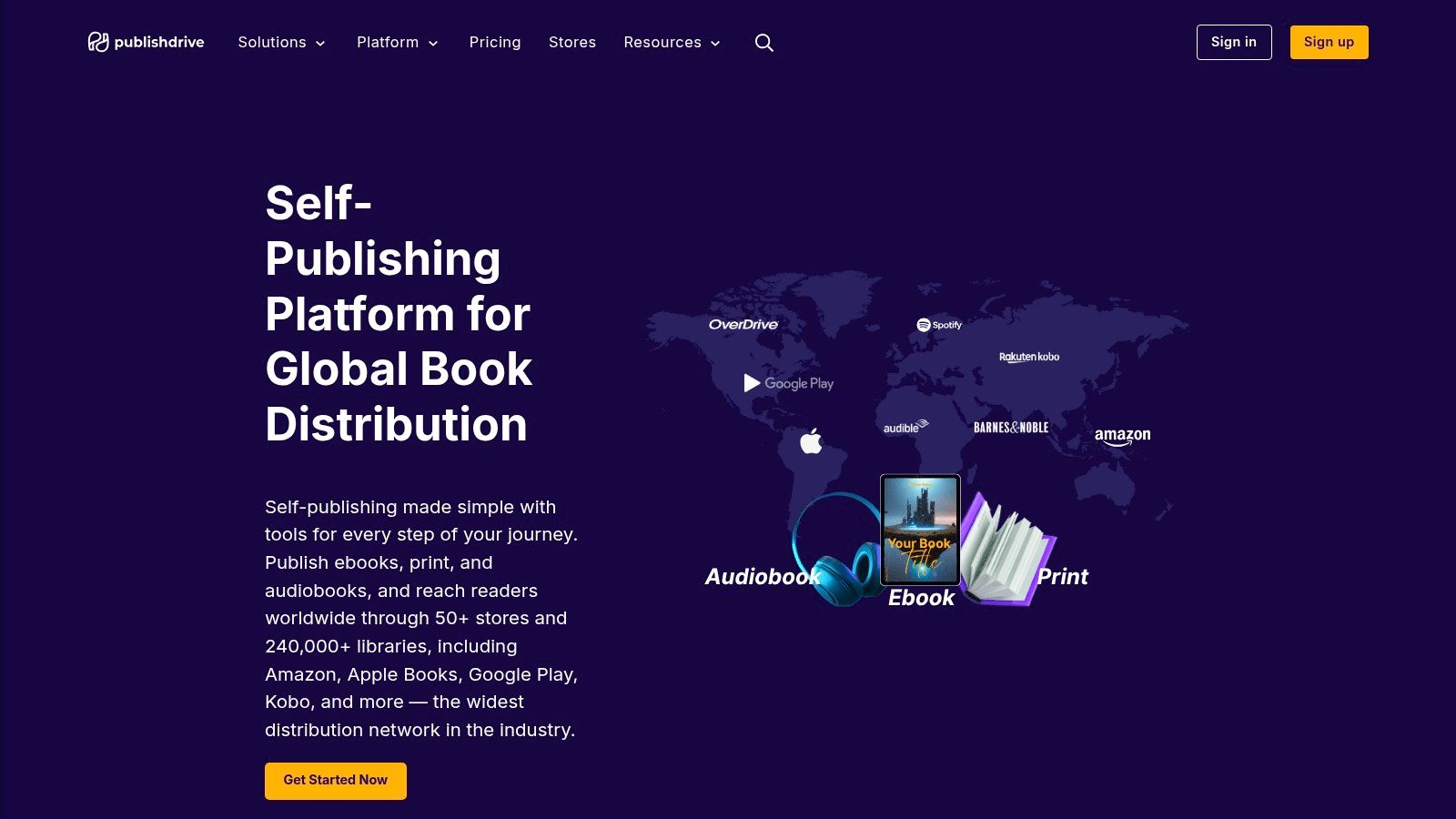
PublishDrive is the subscription economics option. Instead of paying a percentage commission on eligible paid plans, you pay a recurring fee for centralized distribution across ebooks, print-on-demand books, and audiobooks, with formats and channels depending on plan. That model rewards volume and punishes inactivity.
Format breadth is a genuine reason to consider it. The Association of American Publishers reported that digital audio generated $2.4 billion after growing 22.5% in one year, while ebooks generated $2.1 billion after increasing 1.5%. If audio is part of your plan, a distributor that handles it alongside ebook and print saves you a separate platform and another reporting system.
Run the break-even before you subscribe
Paid plans advertise 0% commission, which can beat a percentage fee once sales are steady. A single low selling title won't clear that bar, and the subscription keeps charging whether the book sells or not. Model your last few months of net royalties against the plan cost before switching, not after.
There's a free plan for one ebook distributed to selected stores, which lets you test the workflow cheaply. Custom plans cover larger catalogs, and centralized sales reporting and royalty management tools suit authors juggling many titles and formats. Store access and features vary by plan, so confirm your must have channels are included at the tier you'd pay for.
User feedback is mixed, including serious complaints about royalty payments. Don't migrate a whole catalog on the strength of the commission pitch alone. Test one title, verify reporting and payment, then expand.
- Pros: 0% commission on paid plans, multiple formats in one account, free entry plan for one ebook
- Cons: Subscription may not pay off for one low selling title, features vary by plan, mixed payment feedback
6. Lulu
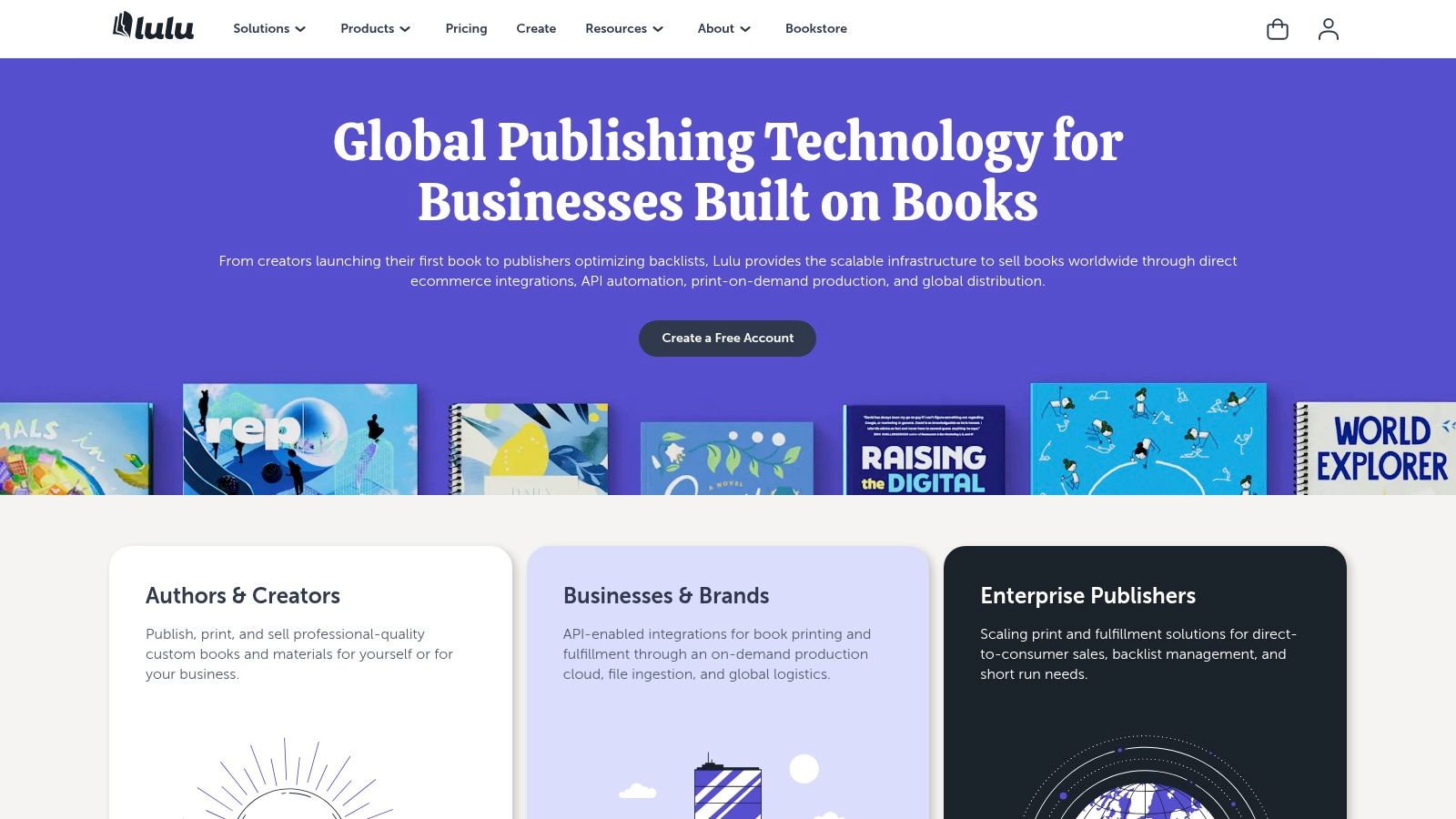
Choose Lulu if selling direct to readers matters as much as retail presence. It's a print-on-demand service with the Lulu Bookstore, Lulu Direct options for selling to your own audience, and retail distribution for eligible print books. That combination suits authors with an existing audience they can send to their own sales page.
Direct sales change the margin conversation because you're not relying solely on retail channels and their cut. Retail distribution is still available when you want it. Eligible print titles can be submitted for availability through major online retailers and the Ingram network, so direct and retail can run side by side.
Price it before you list it
Lulu offers print-on-demand production across a range of book types and formats, with no large print run required to make a title available. Use its pricing calculator to estimate print costs and potential earnings before you set a list price. Print cost, retail share, and your margin need to work at the same price, in every channel you enable.
Margin check: If a price only works in your direct store and loses money through retail, your retail listing is a liability, not reach.
Two costs catch authors out. Retail distribution requires purchasing and approving a proof copy first, so build that expense and delay into your launch schedule. Retail and distribution partners also take a portion of sales, which compresses margins compared with direct sales.
Lulu won't find your readers for you. You remain responsible for attracting buyers and marketing the book, whether they purchase direct or through a retailer. If you have no audience and no marketing plan, the direct sales advantage won't materialize.
- Pros: Direct-to-reader sales plus optional retail distribution, no large print run, pricing tools for cost estimates
- Cons: Proof copy purchase required for retail, partner shares reduce margins, marketing is entirely yours
7. BookBaby
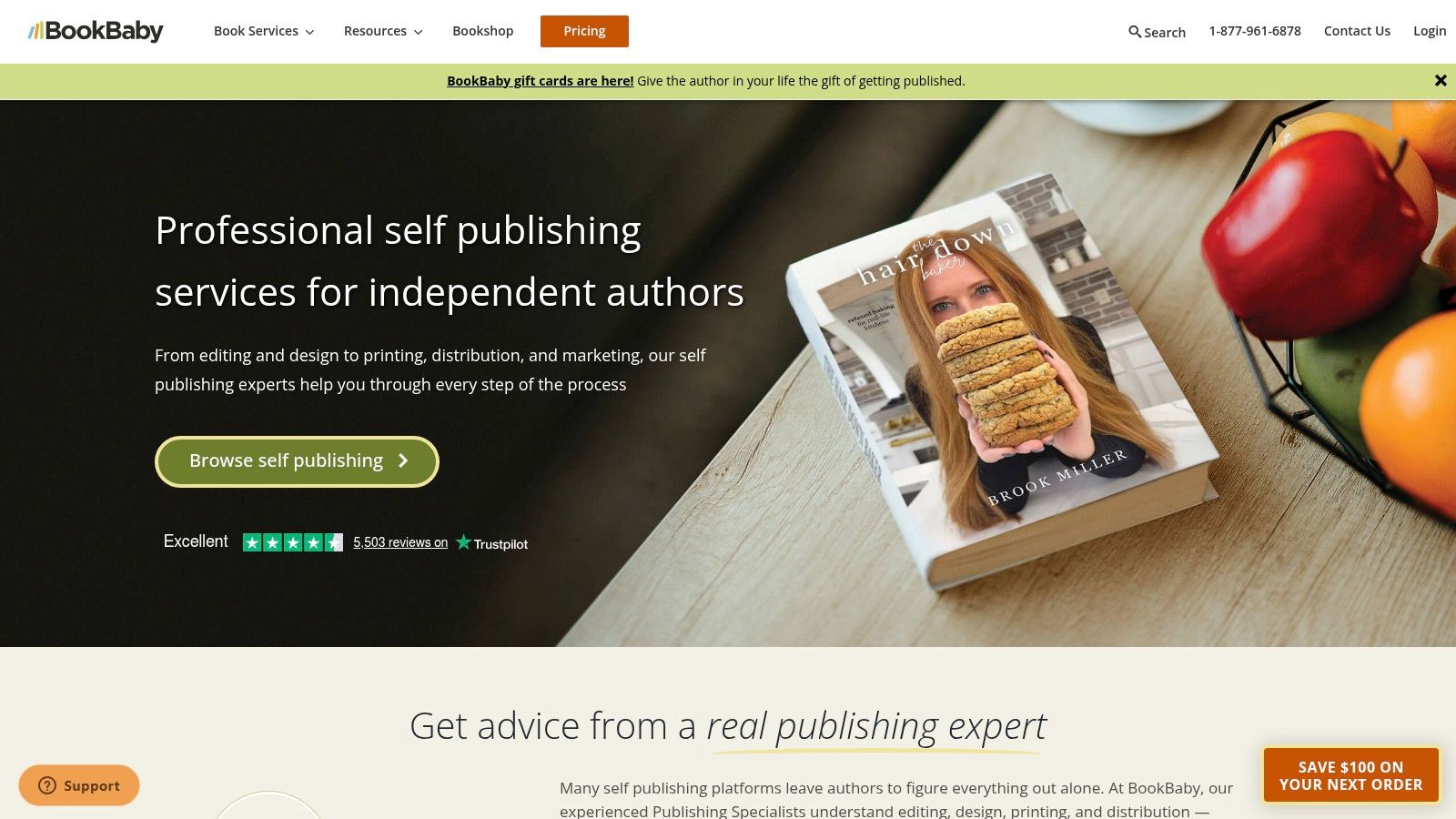
BookBaby fits authors who want assisted DIY rather than a pure self-serve dashboard or a fully managed partner. It offers distribution alongside optional production and publishing services, with publishing specialists and customer support for authors who want guidance. You stay involved, but you're not troubleshooting alone.
Its described reach covers global ebook distribution to major digital retailers, including Amazon, Apple Books, Kobo, and Barnes & Noble. Print-on-demand sales run through Amazon and BookBaby Bookshop. Optional services include editing, design, formatting, and audiobook production, so you can buy help only for the stages you can't handle.
Confirm the print channels before you pay
That print setup is the point to interrogate. If broad physical bookstore reach is your goal, confirm the specific print channels available for your title before committing, because ebook reach and bookstore orderability are different products. Don't assume a print-on-demand listing equals trade distribution.
Bundled services cost more than free or low cost DIY platforms, and that premium only pays off if you use the help. If your files are already production ready, KDP or an aggregator will likely serve you cheaper. If they aren't, paying for design and formatting here can be cheaper than fixing errors after publication.
User reviews often praise staff and finished books, though experiences vary and some users report delays or communication issues. Ask for a clear timeline and a named contact before you start. Assisted publishing only works if the assistance is responsive.
- Pros: More hands-on support than DIY distributors, production services and distribution under one provider
- Cons: Higher cost than self-serve platforms, print bookstore reach needs confirming, some delay reports
Top 7 Book Distributors for Self-Publishers: Comparison Matrix
Choose a distributor by the job you need done. The table compares setup demands, channel reach, and the trade-offs each route leaves you to manage.
| Service | 🔄 Setup and resource requirements | 📊 Expected distribution and outcomes | ⭐ Key advantage | 💡 Ideal use case |
|---|---|---|---|---|
| BarkerBooks | Full-service support; fees are quote-based. Three-week sprints may apply, depending on scope. | Editing and production through distribution and marketing; support for 91+ countries and English- and Spanish-language projects. | Coordinated publishing services; authors retain rights and royalties. | Authors seeking hands-on, end-to-end support while retaining control of their work. |
| IngramSpark | Requires print-ready files and platform setup; print-on-demand avoids upfront inventory. | Print and ebook access through a broad book-trade network. Availability does not guarantee orders or bookstore stocking. | Established wholesale infrastructure, with author control over metadata, pricing, and discounts. | Authors prioritizing print orderability for bookstores, libraries, and other trade buyers. |
| Amazon Kindle Direct Publishing (KDP) | Free to publish; authors prepare and upload files. Print-on-demand avoids inventory purchases. | Kindle, paperback, and hardcover availability, primarily through Amazon. Eligible paperbacks may use Expanded Distribution. | Direct access to Amazon customers, with title and pricing management in one account. | Authors focused on Amazon sales and a straightforward self-publishing process. |
| Draft2Digital | Centralized setup and reporting simplify multi-store distribution; a distribution fee reduces sales proceeds. | Ebooks reach participating retailers and libraries; paperbacks use Amazon and Ingram-served channels. | Flexible store selection and one dashboard for multiple channels. | Authors seeking wide ebook distribution without managing each retailer separately. |
| PublishDrive | Compare plan options and subscription costs; free entry is available for one ebook at selected stores. | Ebook, print, and audiobook distribution varies by plan; paid plans advertise 0% commission. | Multi-format distribution and reporting through one account. | Authors with multiple titles or sales volume that may justify a recurring subscription. |
| Lulu | Print-on-demand; a proof copy must be purchased and approved for retail distribution. | Direct sales through Lulu options and retail distribution for eligible print books. | Combines print-on-demand, direct sales, and retail distribution options. | Authors wanting flexible print formats and direct-to-reader sales alongside possible retail reach. |
| BookBaby | Optional production services and distribution; bundled support may cost more than DIY platforms. | Ebook distribution to major retailers and print-on-demand sales through Amazon and BookBaby Bookshop. | Hands-on publishing support, including editing, design, formatting, and audiobook production. | Authors who want production assistance and distribution from one provider. |
The trade-offs are practical: wide availability does not guarantee orders, and print distribution still depends on retailer decisions. DIY platforms reduce service costs but leave file preparation and setup to you. Paid plans and bundled help can save time, but compare their fees with the work you need done.
Pick Your Distribution Path in 10 Minutes
Which distribution route fits the way you plan to sell? Compare net royalty after wholesale discounts, retailer commissions, printing costs, currency conversion, taxes, and returns, then weigh the work each route leaves you. A high royalty rate means little if your readers do not buy through that channel.
Choose KDP for Amazon-first sales when you want a direct setup and no upfront cost. Choose IngramSpark for bookstore, library, and school orderability if you will pitch those buyers yourself. Orderability is not a promise of shelf space. Choose Draft2Digital for wide ebook and library reach if managing uploads to individual stores is work you want to avoid.
Match the remaining options to your business model. PublishDrive suits authors whose sales can cover its recurring subscription fee; check the plan costs against expected earnings. Lulu fits direct-to-reader sales with optional retail distribution, especially when you already have an audience to send to your store. BookBaby offers hands-on production help for authors who want support while remaining closely involved in the project. Compare service fees with the cost and effort of hiring help separately.
Your pre-launch checklist
BarkerBooks suits authors seeking full-service publishing, including editing, design, ISBN support, marketing, and bilingual or global guidance from one team. Choose that route when coordinating production is the main obstacle. If your files are finished and you only need distribution, a self-service platform may be a better fit.
- Define must-have channels: List the stores, libraries, and direct sales routes your readers use.
- Calculate net royalty: Subtract fees, commissions, discounts, and print costs from your list price.
- Confirm ownership: Check who holds the ISBN and copyright, and confirm that you retain your rights.
- Test one file: Order a proof or publish an ebook, then check formatting, reporting, and payment.
- Expand on evidence: Add channels only when sales or reader demand justify the extra cost and work.
You do not need every channel at launch. Start with a route that reaches your readers, prepare clean files, enter accurate metadata, and set a price that covers its costs. Track results before adding channels. Each one can mean more file preparation, administration, and fees, so expand only when the sales case is clear.