
A professional self-published novel in 2026 typically costs between $2,000 and $6,000 to produce, while traditional publishing requires zero upfront capital from the author. The final novel cost depends less on the manuscript itself than on the editing, design, format, marketing, and service level you choose.
You may be holding a finished manuscript right now, feeling both proud and slightly alarmed. The writing is done, but the book still needs an editorial plan, a cover that signals its genre, clean interior files, distribution, and a launch strategy. Treating those steps as minor details is how authors end up with a book that exists but struggles to compete.
The right question isn't “How much does it cost to publish a novel?” Ask instead: What must I pay for to create a market-ready book, and which upgrades can wait?
The Reality of Publishing Economics in 2026
The current baseline is clear. A professional self-published novel typically costs about $2,940 to $5,660, based on an analysis of more than 230,000 freelancer quotes, while broader professional estimates place many projects around $2,000 to $6,000. Traditional publishing generally requires $0 upfront from the author, because the publisher absorbs production costs. These figures are summarized in Blurb's publishing cost guide.
That difference reflects two completely different business models.
Traditional publishing transfers the production risk
With a traditional deal, the publisher usually pays for editing, cover design, typesetting, printing, distribution, and at least some launch support. You may still spend money on optional services, such as editorial advice or personal marketing, but you aren't expected to finance the book's core production.
The trade-off is control. A publisher decides whether the manuscript fits its list, how the cover is positioned, when the book launches, and which formats receive attention. You submit to a competitive acquisition process, and a strong manuscript isn't a guarantee of acceptance.
Self-publishing makes the author responsible
Self-publishing removes the gatekeeper, but it also makes you the publisher. You choose the professionals, approve the creative direction, manage the schedule, pay the invoices, and decide how much risk to take.
The economics have changed substantially since print runs required significant upfront capital. Kindle Direct Publishing and print-on-demand allow authors to produce and distribute books without buying large quantities of inventory. That doesn't make publishing free. It shifts the budget toward editorial labor, design, formatting, metadata, and promotion.
Practical rule: Budget for the finished product, not merely the act of uploading a file.
The low end of the range can work for a clean manuscript with a restrained production plan. The higher end becomes reasonable when the book needs substantial structural editing, custom design, multiple formats, or hands-on marketing. A full done-for-you package can reach $2,000 to $15,000, depending on the scope of editing and marketing support, as outlined by PublishDrive's cost breakdown.
My recommendation is straightforward. If you want a commercially credible release, plan around the low thousands, then spend according to the book's actual weaknesses. Don't borrow heavily for decorative extras before you've paid for the editorial work that protects the reader experience.
Breaking Down the Post-Manuscript Workflow
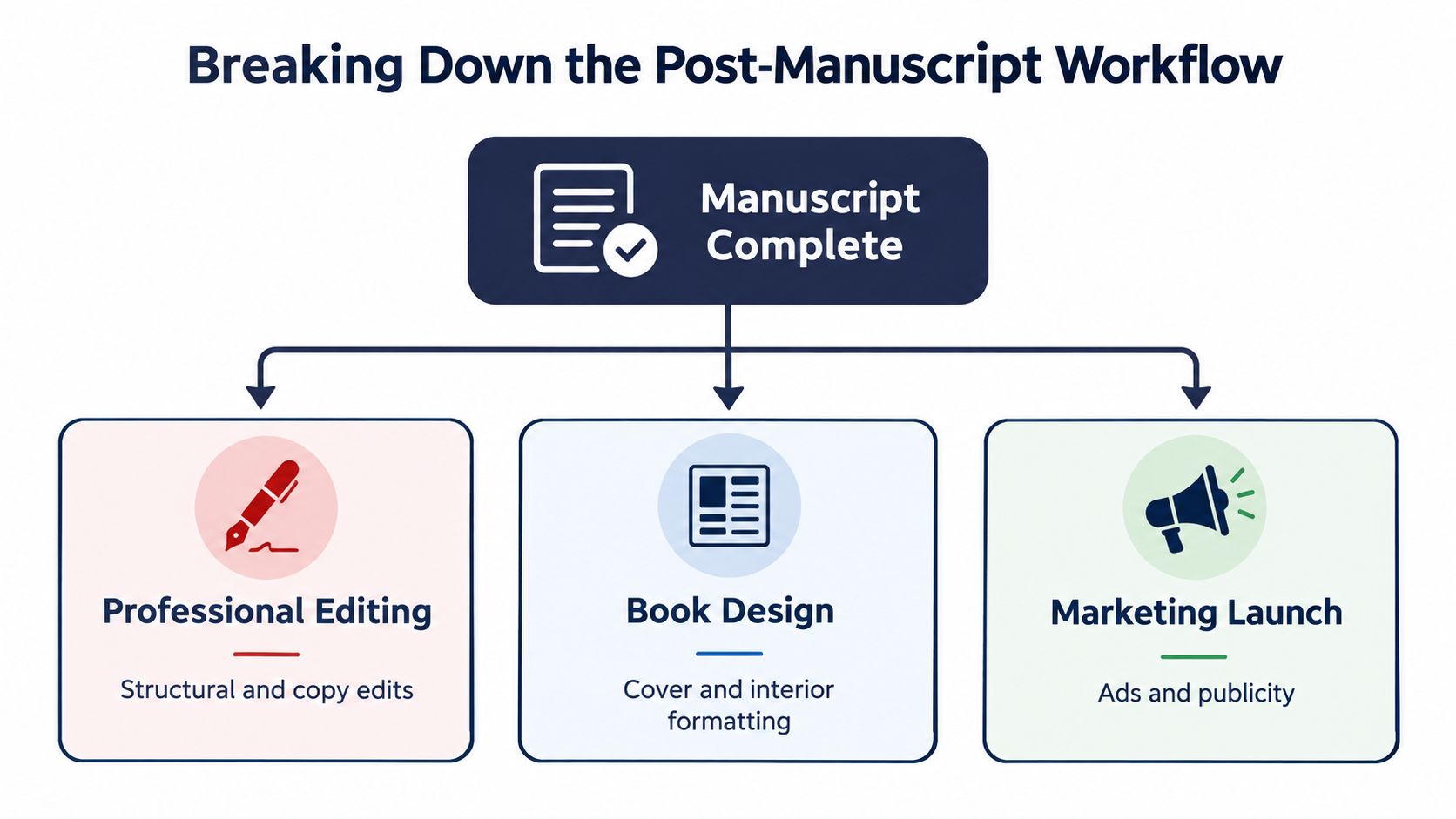
A finished manuscript can still fail as a book. The post-manuscript workflow converts it into a product readers can find, open, read comfortably, and recommend. Budget decisions should follow that order, because each service tier solves a different production problem.
Start with editorial diagnosis
Developmental editing belongs first when the manuscript has problems with structure, pacing, character motivation, scene order, or narrative coherence. Copyediting comes after the story works, tightening sentences, correcting grammar, and removing inconsistencies. Proofreading comes last, after layout, to catch remaining errors in the final files.
Do not hire a proofreader to repair a weak plot. Do not pay for sentence-level polishing before you know whether chapters need to move or disappear. Structural changes made late can force you to repeat copyediting, formatting, and design work.
Ask an editor to diagnose the manuscript before buying a large package. A clean novel may need only copyediting and proofreading. A structurally unstable draft needs developmental work first. That distinction separates a market-ready expense from an optional service tier.
Design sells the promise
Readers often judge a novel before opening a page. The cover must communicate genre, tone, audience, and publishing quality at thumbnail size. Romance, thriller, and literary fiction covers make different promises, so a generic design can misdirect the right readers before the blurb has a chance to persuade them.
Interior formatting has a quieter role, yet errors are obvious. Awkward chapter openings, inconsistent scene breaks, poor indentation, widows, crowded margins, and broken ebook navigation make the book appear unfinished. Use a professional formatter or a reliable production tool, then inspect digital and print proofs before release.
For the full order of services, follow this guide to the stages of publishing a book.
Handle the administrative layer
ISBN and copyright tasks do not improve the prose, but they support distribution and rights management. Requirements and pricing vary by country and format, so check the rules for each edition rather than assuming one registration covers everything.
Distribution depends on accurate metadata. Your title, subtitle, author name, description, categories, keywords, trim size, and files must match across platforms. A well-designed novel with incorrect metadata becomes harder for readers to find.
Marketing completes the release system. It can include retailer-page optimization, an author website, email communication, social content, review outreach, publicity, or paid advertising. Pay for the channels that reach your intended readers, not for a broad package you cannot maintain. A strong book needs visibility, but promotion should follow editorial quality and reliable production.
How Genre and Format Shift Your Baseline Budget
A contemporary romance and a research-heavy historical novel can share a word count yet require very different budgets. Genre conventions shape the editorial workload, as explained in this guide to the types of genre in writing. Format then adds separate production requirements, so budget by the actual scope of the project, not by manuscript length alone.
Speedy Brand's genre and format cost guide places romance novels at about $1,800 to $3,000, young adult novels at $1,800 to $3,500, and historical fiction at roughly $300 to $500 more than a standard novel. An audiobook can add approximately $1,000 to $5,000 or more. Use these figures as planning ranges, then price the services your manuscript needs. Speedy Brand's genre and format cost guide provides the cited comparisons.
Compare the editorial demands
Romance editing must protect emotional pacing, character chemistry, genre conventions, and reader expectations. A low-cost edit that smooths sentences while missing those elements is money wasted.
YA requires close attention to age-appropriate voice, stakes, perspective, and cultural detail. Historical fiction may require extra research and fact-checking, increasing the workload even when the prose is already strong.
Fantasy and science fiction add their own risk. Editors may need to track invented systems, terminology, political structures, timelines, and world-building logic. The genre does not automatically require every premium service. An ambitious creative scope does create more opportunities for costly errors, so fund the editorial review that prevents them.
Treat formats as separate products
An ebook, paperback, hardcover, and audiobook each need dedicated files, quality checks, and design decisions. Print production covers dimensions, spine width, bleed, and physical readability. Ebook production requires responsive behavior and dependable navigation. Audio involves narration, recording, editing, mastering, and distribution preparation.
Set a separate audiobook budget. If your audience strongly prefers audio, delaying it may limit reach. If your priority is testing the story and market position, release the core formats first and add audio after the book has demonstrated an audience.
Production advice: Spend on complexity only when it serves reader expectations for your genre.
Custom illustrations, maps, multilingual editions, special interiors, and premium audio can justify their cost. They should follow structural editing and a genre-appropriate cover, which do more to make a novel market-ready.
Freelancers Versus Full-Service Publishing Packages
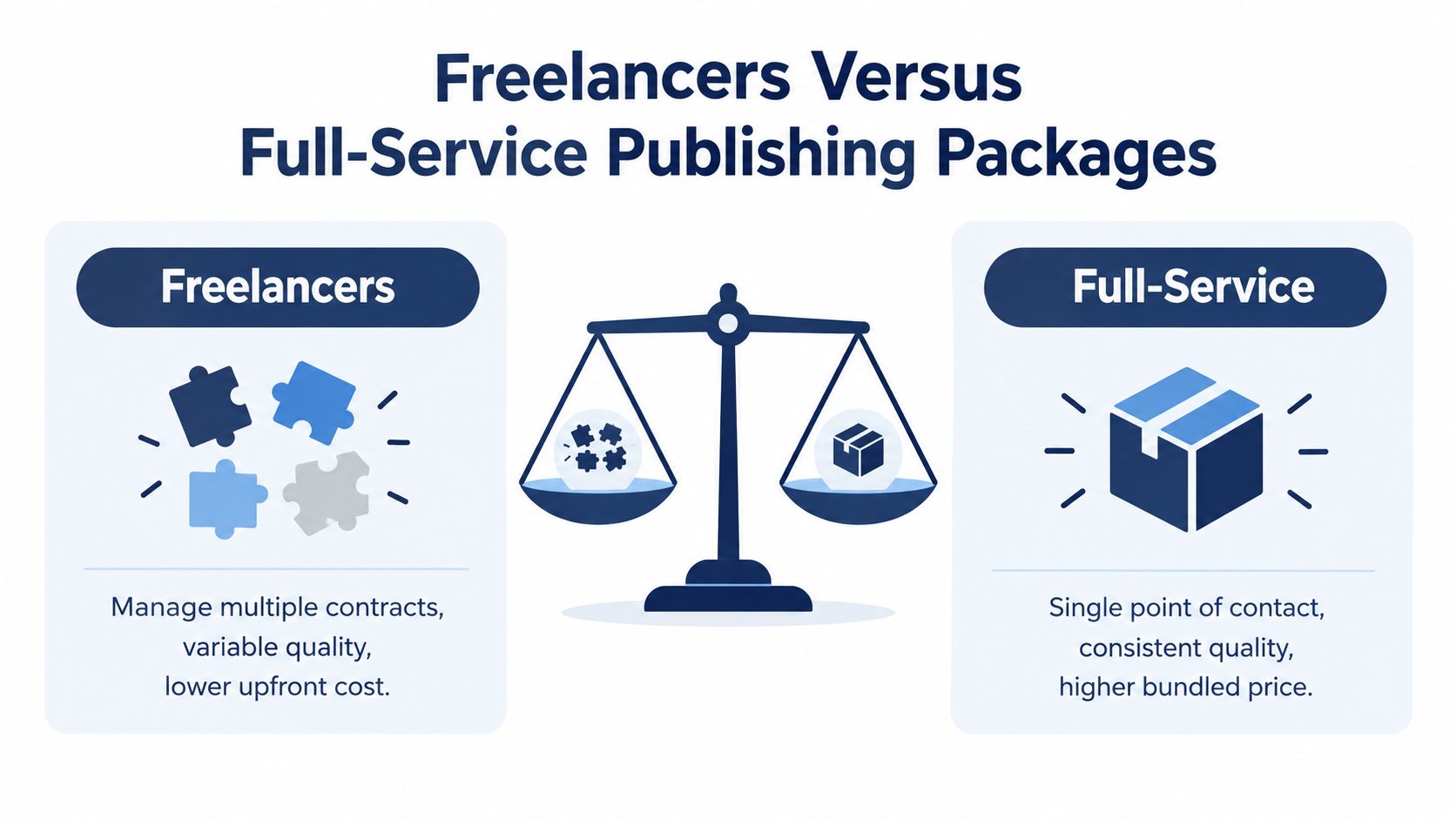
You can hire an editor, designer, and formatter separately, or assign the project to a full-service provider. The cheaper invoice is not always the cheaper route. Freelancers reduce package overhead, but you become responsible for briefs, schedules, file versions, approvals, and handoffs.
The freelancer route suits hands-on authors
Choose freelancers when you can assess portfolios, define deliverables, manage deadlines, and resolve disagreements between specialists. Hire an editor who knows your genre, then select a cover designer whose work supports the book's audience and positioning.
The main risk is fragmentation. An editor may recommend one title treatment, while a designer sends a different market signal. A formatter might also work from an outdated manuscript. Keep a master production plan, centralize files, and require every specialist to work from the approved version.
Freelancers let you direct money toward the work that affects market readiness. Fund the editorial review and genre-appropriate cover first. Handle simple administration yourself, or choose a template-based interior when a custom layout will not improve the reader's experience. Save optional upgrades for after the core book is finished.
Full-service packages buy coordination
A full-service provider places several stages under one workflow. Depending on the tier, the package may cover editing, proofreading, cover design, interior layout, ISBN and copyright support, distribution, author pages, promotional assets, and advertising.
The higher fee pays for production and project management. BarkerBooks service tiers can include editing, design, distribution, author landing pages, multilingual publication, audiobook production, marketing, and live guidance. Compare the scope rather than the label. Confirm the exact deliverables, revision limits, timeline, file ownership, and rights before signing.
Choose the model that protects your weakest resource:
- Choose freelancers when your budget is tighter than your time and you can manage several specialists.
- Choose full service when missed handoffs, deadline pressure, or technical setup would put the release at risk.
- Use a hybrid approach when you want control over selected creative decisions but need support with production, distribution, or launch execution.
A package is not automatically better. Pay for coordination when it removes work you cannot perform reliably. Otherwise, keep the project modular and spend the savings on the editorial and design decisions readers notice first.
Three Sample Budgets for Aspiring Authors
A first-time author can waste money by choosing a tier before identifying the book's actual production needs. Use these models to set a working budget, then adjust for manuscript condition, word count, genre, format, and marketing plans. They are planning ranges, not quotations.
| Budget Tier | Core Services Included | Estimated Cost Range |
|---|---|---|
| Essential | Developmental or copyediting as needed, proofreading, professional cover, ebook and paperback formatting, basic distribution setup, ISBN and copyright guidance | $2,000–$6,000 |
| Standard | Strong editorial workflow, coordinated cover and interior design, multiple formats, author landing page, broader distribution, launch planning, targeted marketing support | $3,500–$8,000 |
| Elite | Comprehensive editorial management, premium design, multilingual publication, audiobook recording, expanded promotional assets, and aggressive advertising support | $8,000–$15,000 |
These ranges reflect professional self-publishing budgets across market-ready and done-for-you services, including estimates reported by PublishDrive. Providers define tiers differently, so compare deliverables rather than trusting the label. The clearest dividing line is scope: Standard may include a coordinated launch and author landing page, while Elite adds a multilingual edition or audiobook production.
Essential means finished, not bare
The Essential tier should cover every reader-facing requirement. Fund the editorial service your manuscript needs, a genre-appropriate cover, clean ebook and paperback files, and dependable distribution setup. Premium video, custom illustration, and broad advertising are optional upgrades. Do not buy them before the book reads well and presents professionally.
Standard adds reach and coordination
Standard suits an author who wants a planned release instead of a silent publication. Multiple formats, metadata preparation, an author landing page, and targeted promotion extend the basic production package. The tier also reduces the number of separate decisions you must manage, which matters when your time is limited.
For a provider-by-provider comparison, review BarkerBooks' guide to publishing costs.
Elite requires a commercial reason
Choose Elite only when its added services support a defined objective, such as reaching international readers, building an audio audience, or developing a larger author brand. Multilingual publication and audiobook production can expand access, while expanded promotional assets and advertising support require a clear audience and sales plan.
Write down the purpose of every upgrade before approving the budget. If you cannot connect a service to readers, positioning, or sales, keep the money in the core manuscript and package.
Smart Strategies to Reduce Expenses
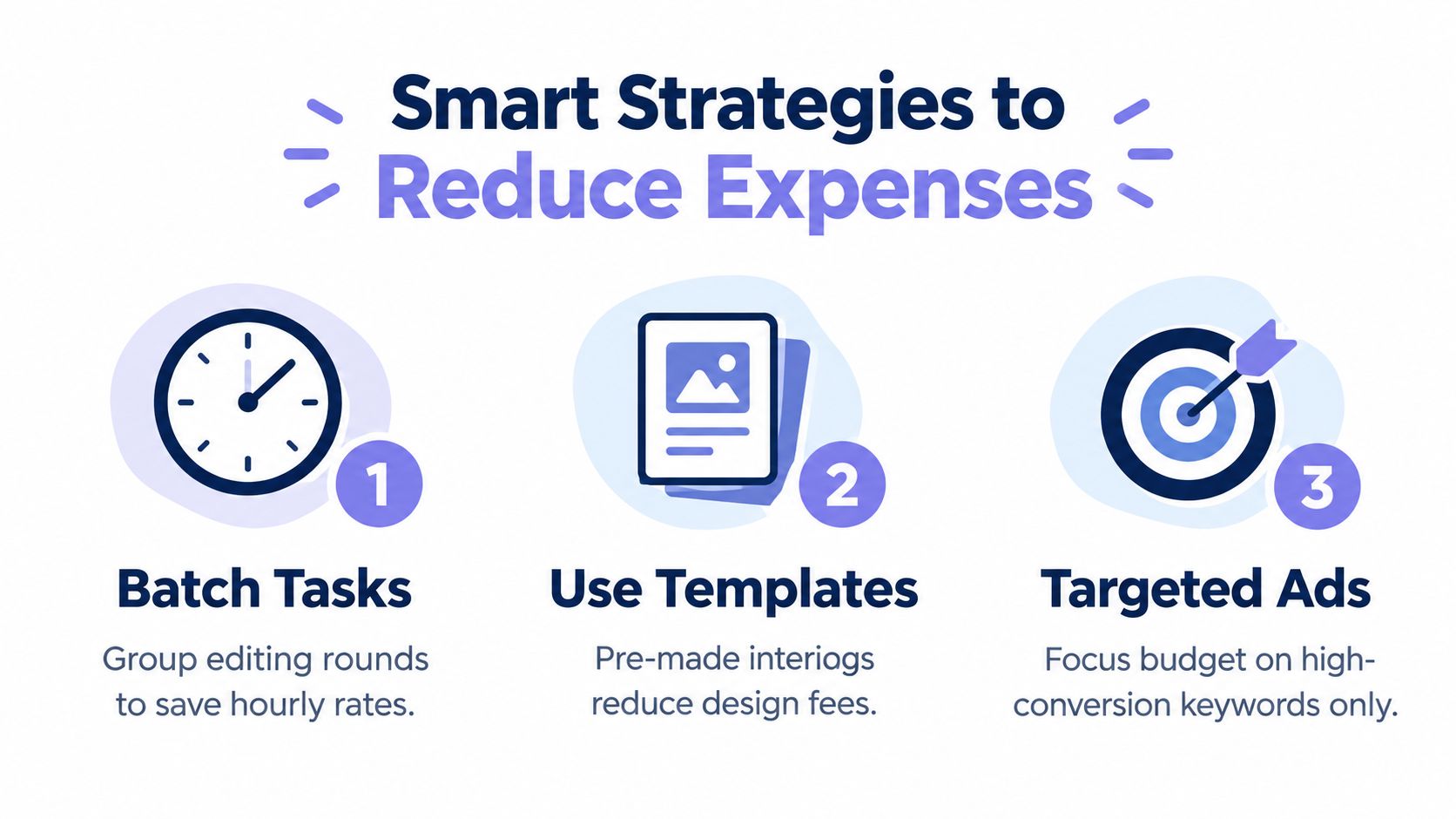
Lowering novel cost starts with removing waste while protecting the work readers judge. Revise as far as your skills allow before hiring an editor, delay formats that lack a clear audience, and eliminate duplicate services. Put the first dollars toward the manuscript's largest weakness, whether that is structure, prose, packaging, or production.
Reduce avoidable production waste
Send your editor a stable manuscript. Major rewrites after copyediting create extra fees and disrupt the schedule. Before the designer starts, provide genre references, trim requirements, planned formats, and a clear description of the intended reader.
A restrained interior layout usually suits a text-led novel. Use a dependable template or production system, then reserve human attention for details readers notice, such as typography, spacing, chapter openings, and file quality.
Spend first on defects readers can see. Weak covers and sloppy prose damage sales before optional extras can contribute.
Use print economics intelligently
Print-on-demand limits the need to buy and store inventory. Bulk offsets lower the per-unit cost, about $7.50–$10 at 100 copies versus $4.50–$6.50 at 500 copies for a 200-page trade paperback, but only order what a credible sales plan supports, according to Origin Books' print cost guide.
A lower unit price does not guarantee a lower project cost. Storage, shipping, and unsold copies can erase the saving. For a first release, match the order to confirmed events, retailer commitments, direct buyers, or other realistic demand.
Make promotion narrower and smarter
Organic audience building requires time, but it can reduce reliance on broad paid campaigns. Build an author website, collect reader permissions ethically, publish useful genre content, and aim launch messaging at readers most likely to value the book.
Use the same discipline beyond the publishing budget. These effective ways to reduce spending can help identify recurring waste in subscriptions, administration, and other business expenses. For advertising, test a narrow audience and clear creative before increasing spend. A small, measurable campaign is more useful than broad promotion with no defined buyer or result.
Treating Your Novel as a Business Investment
A novel is an expense if you publish without a purpose. It becomes an investment when you define the audience, choose a viable format plan, and connect the book to a longer author career.
That doesn't mean every book will repay its production cost. It means you should decide what success means before commissioning services. You may want direct book revenue, a readership for future releases, credibility in a professional niche, international reach, or a foundation for related work. Each goal changes where the budget should go.
Start with a manuscript assessment. Identify whether your largest risk is story structure, prose quality, cover positioning, technical production, or discoverability. Then select the service tier that addresses that risk instead of buying an undifferentiated package.
Keep a separate reserve for revisions and launch activity. You can also look for automated money-saving opportunities when reviewing business expenses, subscriptions, and repeat administrative tasks. Those savings won't replace professional editing, but they may free funds for work that directly improves the book.
The strongest first-time publishing plan is disciplined: finish the manuscript, diagnose its weaknesses, fund the mandatory work, and postpone upgrades until the core product is ready. Track every cost, retain your production files, and make decisions based on the readers you want to reach.
BarkerBooks helps authors turn completed manuscripts into professionally produced books through editorial support, cover design, interior formatting, distribution, and optional marketing and format services. Review your manuscript needs and publishing budget, then visit BarkerBooks to discuss a practical route to release.