
A great book launch is so much more than just a party. Think of it as a powerful marketing moment—your first big push to create buzz, drive those crucial early sales, and truly connect with the readers you wrote the book for. It's where you thank the people who supported you and build the momentum that will carry your book forward. Planning one that really lands is all about blending clear goals with a bit of creative flair.
Laying the Groundwork for Your Launch
Before you even think about booking a venue or picking out an invitation design, you need to ask yourself a critical question: What does a "successful" book launch actually look like for me?
Is it selling 50 copies right there on the spot? Maybe it's about landing three mentions in local media. Or perhaps your main goal is to build an email list of readers who will be hungry for your next book. If you don't define your target, you're just throwing a party. With a clear objective, you're executing a strategic campaign.
This early planning phase is where you turn your big idea into a real, actionable blueprint. Every decision you make from here on out—from who you invite to what snacks you serve—should tie directly back to those core goals.
Defining Your Core Objectives
First things first, get specific about what you want to achieve. Your goals are going to shape the entire feel and focus of your event.
Most authors I've worked with are aiming for one of these things:
- Driving Immediate Sales: This is the most common one. The goal is simple: sell as many books as you can right then and there.
- Generating Media Buzz: Success might look like getting a feature on the local news, a write-up in a popular blog, or getting tagged by a few key influencers on social media.
- Building Your Reader Community: For some, it's less about the sales and more about the connection. The goal here is to gather email sign-ups and start building a loyal following.
- Networking and Partnerships: A launch event can be a fantastic opportunity to rub shoulders with booksellers, librarians, fellow authors, or even future collaborators.
Once you know your primary goal, set a measurable target. Instead of just "selling books," make it "sell 75 signed copies." That kind of clarity makes it so much easier to know if your event was a true success. This all fits into the bigger picture of your promotional strategy, which you can map out more fully in a complete book marketing plan.
Choosing the Right Event Format
Your audience, your book's genre, and your budget are the three biggest factors that will guide your choice of format. Each option has its own vibe and its own set of challenges.
Your event format shapes everything from budget to engagement. This table breaks down the key differences between in-person, virtual, and hybrid launches.
Choosing Your Launch Party Format
| Factor | In-Person Event | Virtual Event | Hybrid Event |
|---|---|---|---|
| Atmosphere | High energy, personal connections, and a celebratory feel. | Convenient and accessible to a global audience. | Combines the energy of a live event with broad reach. |
| Cost | Higher, with expenses for venue, catering, and decor. | Lower, with primary costs related to tech platforms and promotion. | Can be the most expensive, requiring two sets of logistics. |
| Engagement | Direct interaction through conversations, readings, and signings. | Requires active moderation through Q&As, polls, and chats. | Manages two distinct audiences simultaneously. |
| Reach | Limited to local attendees who can travel to the venue. | Unlimited global reach, breaking down geographical barriers. | Offers the best of both worlds but can be complex. |
What does this look like in practice? A sci-fi author might go for a killer virtual event with cool digital backgrounds and interactive polls. On the other hand, a poet might find an intimate gathering at a local coffee shop feels just right. The trick is to match the format to your book’s personality and what you know about your readers.
Crafting a Budget and Theme
Think of your budget as the practical scaffolding that holds your creative vision together. It's not the most exciting part, but it's essential.
Start by making a list of every single potential expense: the venue, food and drinks, decorations, marketing materials, and any tech or AV equipment you might need. I always tell my clients to add a 10-15% contingency fund on top of that. Trust me, something unexpected always comes up. For a truly organized approach, using a comprehensive party planning checklist can be a lifesaver, ensuring no detail gets missed.
A well-chosen theme can transform a standard event into a memorable experience. It's not about elaborate costumes; it's about creating an atmosphere that immerses your guests in the world of your book.
For instance, if your historical novel is set in the 1920s, why not create a jazz playlist and design some art deco-inspired invitations? If you wrote a cookbook, it’s a no-brainer to offer samples of a few key recipes. This kind of thematic thinking makes your launch feel cohesive and special, leaving a much stronger impression on everyone who comes.
Your 90-Day Launch Party Timeline
To an outsider, a fantastic book launch party looks effortless. The reality? That "effortless" feeling is the direct result of methodical, strategic planning. The secret isn't some kind of party-planning magic; it's a well-thought-out timeline.
Giving yourself a solid 90-day window is the best way to turn a potentially frantic scramble into a manageable, step-by-step process. This countdown is your roadmap. It breaks the whole thing down into smaller, digestible phases so you can focus on the right things at the right time—and avoid that last-minute panic.
The First 30 Days: Laying the Foundation
This first month is all about making the big decisions that will anchor your entire event. Getting these locked in early prevents so many headaches and budget blowouts down the line. This is where your vision starts to take shape.
Your main focus should be on a few critical areas:
- Secure Your Space (Physical or Virtual): For an in-person party, now is the time to research and book your venue. The best spots—indie bookstores, cool cafes, art galleries—get snatched up months ahead of time. If you're going virtual, you'll want to pick your platform, whether it's Zoom, YouTube Live, or something else, and get familiar with its features.
- Draft the Guest List: You don't need a final headcount, but you need a solid estimate. Who are you inviting? This number directly impacts your venue choice and your budget for things like catering or even digital swag bags.
- Outline the Event Flow: Sketch out a rough agenda for the party. Will you do a reading? A Q&A session? Maybe an interview with a fellow author or an industry friend? Having a basic structure makes it much easier to communicate what you need to any potential partners or vendors.
The image below gives you a great visual of these foundational steps.
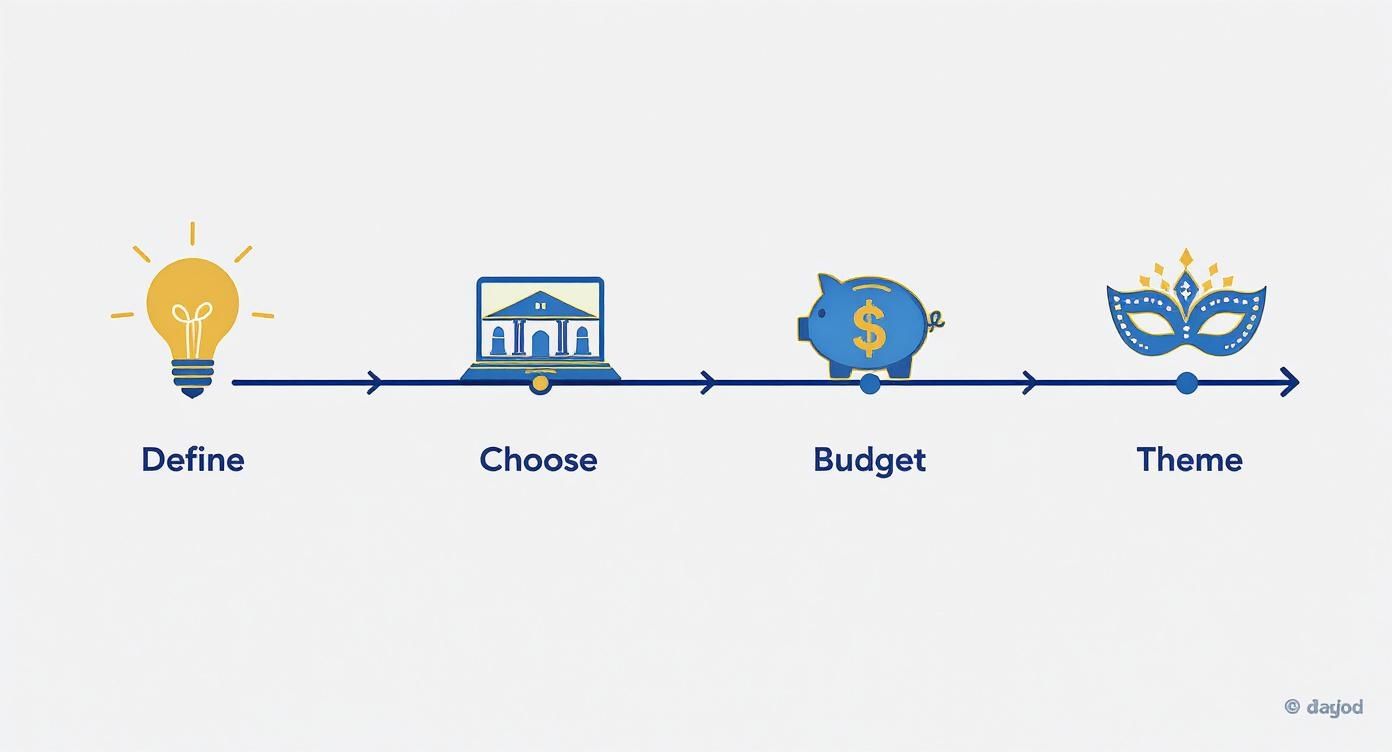
As you can see, locking in your goals, venue, budget, and theme are the essential building blocks for everything that follows.
The Middle Month: Building Momentum
With the groundwork laid, the next 30 days are all about fleshing out the details and kicking off your promotion. This is when the party starts to feel real. You’ll be finalizing agreements and creating the actual materials that will get people excited to come.
Your to-do list for this phase should include sending out official invitations with crystal-clear RSVP instructions. At the same time, you'll be signing contracts with any vendors you need, like a caterer, photographer, or AV tech. This is also the perfect time to start creating your promotional assets.
Pro-Tip: Your goal here is to shift from planning to doing. A beautifully designed invitation and some early buzz don't just fill seats—they build genuine anticipation and make your guests feel like they're about to be part of something special.
Need help with visuals? Our design team at BarkerBooks can create everything from eye-catching social media graphics to a professional book trailer that perfectly captures the tone of your work.
The Final 30 Days: Nailing the Execution
The home stretch. This last month is all about execution, confirming the moving parts, and amplifying your message. It’s where all your hard work finally comes together.
You should be keeping a close eye on RSVPs and sending friendly reminders to anyone who hasn't responded yet. Now's the time to really ramp up your social media, sharing behind-the-scenes peeks and countdown posts to keep the energy high.
If your event is in person, schedule one last walkthrough with the venue coordinator. For a virtual party, run a full tech rehearsal with anyone else involved to make sure cameras, mics, and screen sharing all work without a hitch.
Finally, write up a detailed day-of-event schedule. I'm talking about a minute-by-minute plan: vendor arrival times, tech setup checklist, the flow of your presentation, and how you’ll handle the book signing line. Having this in hand allows you to delegate and actually enjoy your own launch party.
Finding the Perfect Venue and Atmosphere
Think of your book launch venue as more than just a room—it’s the stage where your story gets to come to life for the first time. The right space does more than just hold people; it pulls them into the world you’ve built, turning a simple get-together into an experience they'll remember. Sure, bookstores and libraries are the classic go-to spots, but they're far from your only options.
With somewhere between 2.2 to 4 million new books hitting the shelves globally every year, standing out is a real challenge. That’s why so many authors are getting creative and thinking beyond traditional spaces. They're picking venues that actually feel like their book, and in doing so, are drawing in a much bigger crowd. It's a fascinating shift, and you can read more about the current state of book launch parties to see just how innovative authors are getting.
Matching the Venue to Your Book
Let's step away from the bookshelf for a minute. The truly perfect venue is one that feels like a physical extension of your story.
Here are a few ideas to get you started:
- Cozy Romance: Imagine a local coffee shop filled with comfy chairs, the warm scent of espresso, and soft lighting. It’s an instant recipe for an intimate, romantic vibe.
- Historical Fiction: An art gallery or a historic building with its own story and unique architecture can transport your guests back in time, beautifully complementing your narrative.
- Thriller or Mystery: What about a dimly lit cocktail bar? Or maybe a private room in a vintage hotel? These spots naturally build that sophisticated, intriguing atmosphere you’re after.
- Cookbook: This one’s a no-brainer. Host it at a community kitchen, a local brewery, or a restaurant’s private dining room where you can weave food and drink pairings right into the event.
The real goal here is to find a space that doesn’t just host your party—it elevates it.

Choosing Your Virtual Stage
If you’re going the virtual route, your "venue" is the digital platform you stream from. Picking the right tech is crucial; it’s the difference between a flat webinar and a genuinely interactive celebration that people actually enjoy.
Most authors land on either Zoom or YouTube Live, and each has its own strengths.
| Feature | Zoom | YouTube Live |
|---|---|---|
| Interactivity | High (breakout rooms, polls, direct Q&A) | Moderate (live chat, polls via third-party tools) |
| Audience Size | Best for smaller, controlled groups (up to 1,000) | Excellent for large, public broadcasts (unlimited viewers) |
| Ease of Access | Guests may need to download the app | Easily accessible via a simple web link |
| Recording | Simple, with cloud and local storage options | Automatically archives the stream to your channel |
My take? If you want to foster deep, meaningful connections with your readers, Zoom's breakout rooms are a game-changer for small-group discussions. But if your main goal is to reach as many people as possible, YouTube Live is the powerhouse.
Crafting an Unforgettable Atmosphere
Once the venue is locked in, it's time to create an atmosphere that sings. You don't need a Hollywood budget for this—it’s all about the small, thoughtful details that echo your book's mood.
Start by thinking about the senses. What should the event sound like? Put together a playlist that matches your story's tone—maybe an epic instrumental score for a fantasy or some upbeat indie pop for a contemporary YA. Lighting is just as important. A few strands of string lights or some battery-powered candles can instantly make a space feel softer and more magical.
Your book trailer isn't just a marketing tool; it's the centerpiece for your launch. Kicking off the event by playing a slick, professional trailer is the fastest way to grab everyone's attention and set the perfect emotional tone.
Simple decor can bring your theme to life without breaking the bank. Writing a travel memoir? Use old maps as placemats. Launching a sci-fi novel? A few well-placed metallic or neon accents can give you that futuristic feel. At BarkerBooks, our video production team specializes in creating those high-impact book trailers that can become the focal point of your entire launch, whether it’s in-person or online.
Creating Buzz and Filling the Room
Let's be honest: even the most perfectly planned book launch means very little without an audience. The real magic happens when you generate a palpable excitement—that feeling of a can't-miss event. Your goal isn't just to send out a few emails; it's to create a sense of occasion that gets people genuinely thrilled to show up.
Building that kind of momentum takes a multi-channel approach that kicks off weeks in advance. You need to hit potential attendees from several angles so your message sinks in and the hype builds naturally. For some great, field-tested ideas, check out these proven strategies for increasing event attendance which can help you get that packed-house feel.
Crafting a Simple and Effective Press Release
It might sound a bit old-school, but a short, punchy press release is still a fantastic tool, especially for getting the attention of local media and niche book bloggers. The trick is to keep it brief and make it newsworthy. Journalists are swamped, so you have to get straight to the point.
Your release should immediately answer the basics:
- Who: Your name and the title of your new book.
- What: The book launch party. Be sure to mention anything special, like a Q&A session, a guest speaker, or themed activities.
- When: The exact date and time.
- Where: The physical address or the virtual platform link.
- Why: What’s the hook? Are you a local author debuting your first novel? Does your book’s theme connect with a local landmark or issue?
Keep the whole thing to one page. A compelling headline does a lot of the heavy lifting—think "Local Author to Launch Debut Fantasy Novel with Immersive Event at [Venue Name]." Always end with your contact info and a link to your author website. Get this out to local papers, community calendars, and genre-specific bloggers about three to four weeks before your event.
Building Your Social Media Campaign
These days, the buzz is built on social media. This is especially true if you want to connect with younger readers. The data doesn't lie: social media is the primary discovery tool for new products, with 64% of Gen Z and 59% of Millennials leading the charge. That makes platforms like Instagram and TikTok absolutely essential for getting the word out about your launch party.
A great social plan is all about consistency and variety. You can’t just post once and hope for the best. Here’s a simple weekly framework you can adapt:
| Week | Focus | Post Ideas |
|---|---|---|
| 4 Weeks Out | The Big Reveal: Announce the party. | Create a sharp, official event graphic. Record a personal video invitation. Write a blog post with all the juicy details. |
| 3 Weeks Out | Behind the Scenes: Show the process. | Share sneak peeks of decorations or your outfit. Run a poll asking followers what they're most excited about. Post a countdown graphic. |
| 2 Weeks Out | Highlighting Value: Why should they come? | Introduce any special guests. Announce a giveaway exclusive to attendees. Share a killer quote from the book. |
| Launch Week | Final Push: Create urgency. | Start posting "Only 3 days left!" reminders. Go live to answer last-minute questions. On the day of, share your excitement! |
Don't forget to create a unique event hashtag, something like #[YourBookTitle]Launch, and use it on every single post. It pulls the whole conversation together in one place.
Authentic Influencer and Blogger Outreach
Getting "bookstagrammers" and BookTok creators on board can give you a massive boost, but your outreach has to feel genuine. Blasting out a generic, copied-and-pasted email just won't cut it.
The key to successful influencer collaboration is connection, not transaction. Follow them first. Engage with their content. When you do reach out, show them you understand and appreciate their specific brand and audience.
Instead of just asking for a promo post, offer them real value. This could be an exclusive interview, an advanced review copy, or even a special VIP experience at the launch party. Frame it as a genuine partnership. For example, you could say, "Your thoughtful reviews on historical fiction are fantastic. I think my new novel would be a great fit for your audience, and I'd love to invite you as my special guest to the launch." That personal touch makes all the difference.
If you’re brainstorming ways to make your party unforgettable, we’ve put together a whole list of creative book launching ideas to help you get inspired.
Managing Book Sales and Post-Party Momentum
The confetti has settled and the last guest has gone home, but your book launch party’s real job is just getting started. A truly successful event isn't just measured in happy attendees—it's measured in book sales and the buzz that keeps going long after the party ends. Knowing how to handle sales smoothly during the event and carry that energy forward is what turns a great night into a genuine win for your author career.

This focus on both immediate sales and long-term momentum is more important than ever. The self-publishing world has exploded, jumping from around 153,000 titles in 2010 to over 1.6 million by 2018. This has completely changed the game, forcing authors to get savvy with their launch strategies to stand out.
Streamlining Your On-Site Sales
Making it dead simple for guests to buy your book is non-negotiable. Any friction or confusion at the sales table can kill a potential purchase. Luckily, you have a couple of great options for making this process seamless.
Often, the easiest route is to partner with a local independent bookstore. They can handle everything—ordering the books, processing credit cards, and managing the inventory. This frees you up to do what you're there for: connecting with readers and signing copies. Plus, it builds a fantastic relationship with a bookseller who can become a long-term champion for your work.
If you'd rather handle it yourself, modern tools make it easy. A simple card reader like Square or a PayPal QR code lets you take payments quickly and professionally. Just make sure you have a dedicated, well-lit sales table and bring more books than you think you’ll sell. Running out is a good problem to have, but it’s still a problem for a reader who was ready to buy.
Driving Sales from a Virtual Event
When your launch party is online, the path to purchase has to be even more direct. Your audience can’t just walk over to a table and pick up a copy, so you have to bring the checkout line to them.
Here’s how to nail it:
- Make Links Unmissable: Drop a "Buy Now" link everywhere—in the event description, in the live chat, and even as a graphic on your screen.
- Use Your Voice: Don't just rely on text. Verbally remind people where and how to buy the book a few times during the broadcast.
- Offer an Exclusive: Give people a reason to buy right now. A signed bookplate you can mail out later or a bonus digital download works wonders as an incentive for live attendees.
A fantastic trick for virtual events is offering signed bookplates. It's just a small, adhesive label with your signature, but it allows readers anywhere in the world to get a personalized copy. It’s a simple touch that makes them feel just as special as your in-person guests.
Keeping the Momentum Going Post-Party
The buzz you worked so hard to create shouldn't vanish when the event ends. Your follow-up plan is what stretches the life of your launch and keeps those sales coming in.
Within 24-48 hours, send a thank-you email to everyone who RSVP'd. Pack it with photos from the event, another link to buy the book, and a friendly ask for them to leave a review once they've read it.
Social media is your best friend here. Post a photo album on Facebook, share highlight clips on Instagram Reels or TikTok, and pull out a few powerful quotes from your reading to share as graphics. When you see attendees posting about the party, share their content and tag them to show your appreciation. This creates a ripple effect of social proof that is pure gold.
Finally, keep a close eye on your sales data in the weeks after the launch. Those numbers tell a story and help you decide what marketing moves to make next. If you need a hand with this, BarkerBooks offers services that can help you track book sales and use that data to fuel your book's long-term success. This is where a good party transforms into a great sales engine.
A Few Common Questions About Book Launch Parties
Even the most seasoned authors run into questions when planning a launch. It’s completely normal, especially when you're trying to make sure every detail is perfect. Let's walk through some of the things that come up most often, so you can move forward with total confidence.
How Far in Advance Should I Plan Everything?
I always tell authors to give themselves a solid three months. Seriously, that 90-day window isn't just an arbitrary number—it’s the sweet spot that separates a frantic, stressful launch from a smooth, strategic one.
Why so long? Well, for starters, the best venues get snapped up quickly. Starting three months out gives you a real shot at booking a space you actually love, not just one that’s available. It also gives your guests enough notice to truly clear their calendars instead of trying to squeeze you in.
But the biggest reason is marketing. A great launch party needs a slow, steady drumbeat of promotion. Three months is the perfect amount of time to build genuine excitement, line up partners, and create buzz that feels authentic, not rushed. You'll be able to think clearly and make smart decisions instead of panicking and throwing money at last-minute problems.
What Are the Biggest Mistakes I Should Avoid?
The most common mistake I see is diving in without a clear goal. What does "success" actually look like for you? Is it selling 100 books on the night? Getting coverage in three local media outlets? Adding 200 new subscribers to your email list? If you don’t define your target, you’ll have no way of knowing if you hit it.
Another classic pitfall is under-promoting the event. A few posts on Instagram and a single email to your list just won't cut it anymore. To fill a room (whether physical or virtual), you need a consistent promotional push that builds momentum over several weeks.
A few other missteps I've seen trip authors up:
- Skipping the Tech Rehearsal: For any virtual event, this is non-negotiable. Test your mic, camera, and streaming software. Then test it again. Trust me.
- Running Out of Books: There's nothing worse than having a line of eager readers and an empty box of books. Always order more copies than you think you'll need.
- Forgetting to Follow Up: The party isn't over when the last guest leaves. Not sending a thank-you note or sharing photos and videos afterward is a huge missed opportunity to keep the energy going.
I can't stress this enough: The launch party is the starting line, not the finish line. A great follow-up strategy is what turns that initial buzz into long-term sales and reader loyalty.
How Can I Make a Virtual Launch Party Genuinely Fun?
The secret to a great virtual event is interaction. No one wants to sit and passively watch an author read from a book for an hour. You have to pull your audience into the experience and make them feel like they're part of something special.
Think less "lecture" and more "late-night talk show." Instead of a long, straight reading, break up the time with different segments.
Try hosting a lively Q&A where you answer questions live from the chat. Use your platform’s polling features to ask fun questions about your characters or a tricky plot point. You could even invite a friend or another author to act as an interviewer, which creates a much more natural, conversational vibe. Sprinkling in short, pre-recorded videos—like a tour of your writing space or a slick book trailer—is another great way to keep the energy up.
And don't forget to offer perks exclusively for your attendees! A raffle for a signed book, a digital goodie bag with bonus content, or a special discount code makes your audience feel seen and appreciated. It transforms them from passive viewers into a real community.
At BarkerBooks, we know your book launch is more than just a party—it's a major milestone. Our marketing and design teams can jump in to create beautiful promotional materials, produce a professional book trailer, and map out a social media plan that guarantees your launch is a hit. Let us handle the heavy lifting so you can focus on celebrating your incredible accomplishment. Find out more about our author services.