
Fantasy characters don't fit neatly into good and evil, gifted and powerless, human and monstrous. A hero can serve a corrupt cause, a villain can protect a vulnerable community, and a loyal companion can make the choice that changes the entire story. The most useful types of fantasy characters aren't fixed personality labels. They're recurring storytelling functions, or ways a character creates pressure, reveals information, supports a theme, or forces another character to choose.
Fantasy commonly organizes characters along two overlapping systems. One describes what a character does in the story, such as hero, mentor, villain, or magical helper. The other describes what the character is, such as elf, dwarf, dragon, human, or orc. Tolkien's Middle-earth helped establish many modern expectations by combining archetypal roles with invented cultures, languages, genealogies, and histories. His The Hobbit appeared in 1937, followed by The Lord of the Rings in three volumes between 1954 and 1955, creating a model later adapted across novels, games, films, and role-playing settings. Research on Tolkien's influence and modern fantasy categories
The list below treats each type as flexible. Each entry defines the function, explains its strengths and limitations, offers literary demonstrations, and ends with a prompt you can adapt. Combine types, reverse their expected behavior, and preserve the character's agency. A mentor can become an antagonist, a chosen one can refuse the prophecy, and an ordinary villager can possess more moral authority than the kingdom's most powerful mage.
1. The Hero
The hero is the character whose choices drive the central struggle. They face danger, pursue a difficult objective, and change as the consequences of their decisions accumulate. Courage matters, but heroism doesn't require fearlessness or exceptional power. Frodo Baggins is compelling partly because he remains vulnerable while carrying an immense burden. Katniss Everdeen becomes a catalyst for change not because she begins with a complete political vision, but because her protective instincts place her inside a conflict larger than her own survival.
A hero gives a fantasy story direction. Their desire turns setting into action. A threatened village becomes urgent when the hero's family lives there. A magical inheritance becomes meaningful when accepting it could destroy the hero's relationship with the person they love. The hero's strengths might include persistence, empathy, tactical skill, or the willingness to act when others hesitate.
Strengths and limitations
The familiar version of the hero is brave, morally clear, and increasingly capable. That pattern works, but it becomes predictable when the character's virtues solve every problem. Give the hero a flaw that creates complications rather than a decorative weakness. Pride can make them reject help. Compassion can cause them to spare an enemy who later returns. Loyalty can keep them serving a harmful institution.
Avoid making every obstacle a test of combat ability. A hero might win by admitting ignorance, negotiating with a rival, or refusing a supposedly necessary sacrifice. A corpus study of fantasy novels found that terms such as hero, mentor, warrior, mage, and rogue help readers recognize genre roles and form expectations about a character's capabilities and function. That makes role language useful, but differentiation must come from motive, history, ethics, and change. The fantasy character-class study
Prompt: Your hero can defeat the enemy, but doing so will confirm the regime's propaganda about them. What do they sacrifice to win without becoming the symbol their opponents invented?

2. The Mentor
A mentor supplies knowledge, training, perspective, or protection that the main character doesn't yet possess. Gandalf guides the Fellowship through danger, while Haymitch Abernathy prepares Katniss and Peeta for a system designed to exploit them. The mentor's value lies less in having every answer than in helping another character ask better questions.
Mentors often stand between the ordinary world and the fantastic one. They explain a magical tradition, identify a hidden threat, or recognize the political meaning of an ancient artifact. Yet a mentor shouldn't function as a walking encyclopedia. If they can solve the central problem themselves, their presence can drain tension from the plot.
Make guidance costly
Give the mentor a private goal that doesn't depend on the student's success. Dumbledore's history and secrets complicate his guidance, while a less powerful mentor might be trying to repair a failure from an earlier generation. Knowledge should have limits. The mentor may understand the spell but not the culture that gives it meaning. They may know the prophecy but misunderstand the person destined to fulfill it.
The relationship also needs movement. The student might begin with admiration, shift into suspicion, and eventually become a teacher in their own right. Departure doesn't have to mean death. A mentor can lose authority, leave after a betrayal, or remain present while accepting that the student must make the final decision alone.
For practical guidance on giving characters layered motives, relationships, and contradictions, explore these questions about characterization.
Practical rule: A mentor should teach the protagonist something useful, but the protagonist should eventually teach the mentor something they couldn't learn alone.
Prompt: Your mentor trained the hero to use a forbidden form of magic. The student discovers that the mentor's greatest achievement was also the cause of a forgotten catastrophe. Does the mentor confess before being confronted?
3. The Shadow or Villain
The villain, or shadow, opposes the protagonist's goal and forces the story's moral or practical conflict into the open. The strongest villains aren't evil because the plot requires an enemy. They pursue a coherent objective, understand the world through a particular philosophy, and make choices that would seem justified from their own position.
Sauron represents corruption on a vast scale, while Cersei Lannister operates through survival, family loyalty, and control. These examples work differently. One is an overwhelming symbolic threat. The other remains intimate and politically legible, with decisions shaped by fear and power. A villain can also be an institution, a magical system, a social order, or an ordinary person who keeps an unjust structure functioning.
Give the antagonist agency
The villain should act independently of the hero. They need plans, alliances, resources, and vulnerabilities that exist before the protagonist enters the conflict. If the antagonist only reacts to the hero's actions, they feel like an obstacle rather than a person.
Don't explain the villain's entire philosophy in a speech. Show it through choices. A ruler who claims to value peace might silence every critic. A necromancer who believes death is unjust might preserve the dead without their consent. A rebel who wants liberation might reproduce the hierarchy they fought.
The shadow becomes especially effective when it reveals a possible future for the hero. The villain may possess the protagonist's courage without restraint, their loyalty without compassion, or their desire for justice without patience. Their conflict then asks more than “Who will win?” It asks what kind of person the hero will become.
Prompt: Your villain is correct about the kingdom's greatest injustice, but their proposed solution would remove free will from everyone they claim to save. What evidence would persuade the hero to oppose them?
4. The Trickster
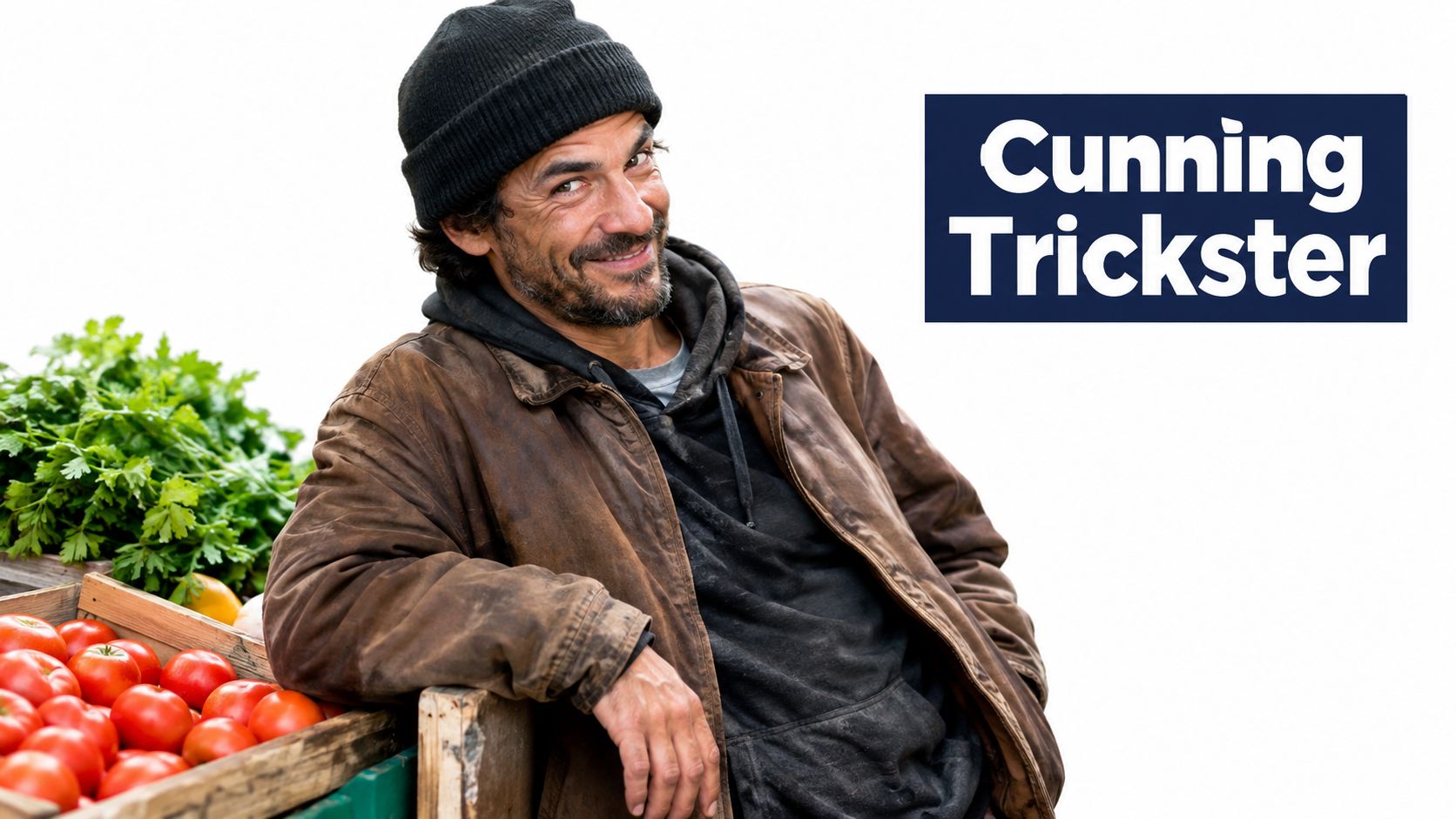
The trickster disrupts rules through deception, humor, improvisation, or an unexpected interpretation of language. Loki can be a threat, ally, or both, while Puck creates disorder that exposes the foolishness of those who believe they control events. In a political fantasy, the trickster might be a courtier who survives by lying. In a village tale, they might be a child who notices that the sacred law has an absurd loophole.
Tricksters create movement when more respectable characters are trapped by tradition. They can expose hypocrisy because they aren't invested in appearing pure. Their methods may be selfish, playful, cruel, or protective. The function matters more than the costume.
Chaos needs boundaries
A trickster without limits becomes an authorial escape hatch. If they can always invent a new lie, spell, disguise, or clever solution, readers stop worrying about consequences. Establish rules for their methods. Perhaps their bargains are binding, their magic works only when someone believes them, or every deception damages a relationship they need.
Humor shouldn't erase harm. A trickster who betrays a friend may be funny in the moment, but the friend still has the right to withdraw trust. Let the character experience vulnerability too. Their jokes might conceal fear of dependence, shame about their background, or a sincere desire to expose a system that once hurt them.
When designing this role, use stock character examples as a starting point, then move beyond the familiar surface. A clever voice isn't enough. The character's choices should reveal what they believe is worth risking.
A trickster changes the story by making the forbidden option seem possible.
Prompt: Your trickster can expose a powerful council by telling one perfectly chosen lie. The lie will also destroy an innocent person's reputation. Who does the trickster decide is expendable?
5. The Wise Woman or Crone
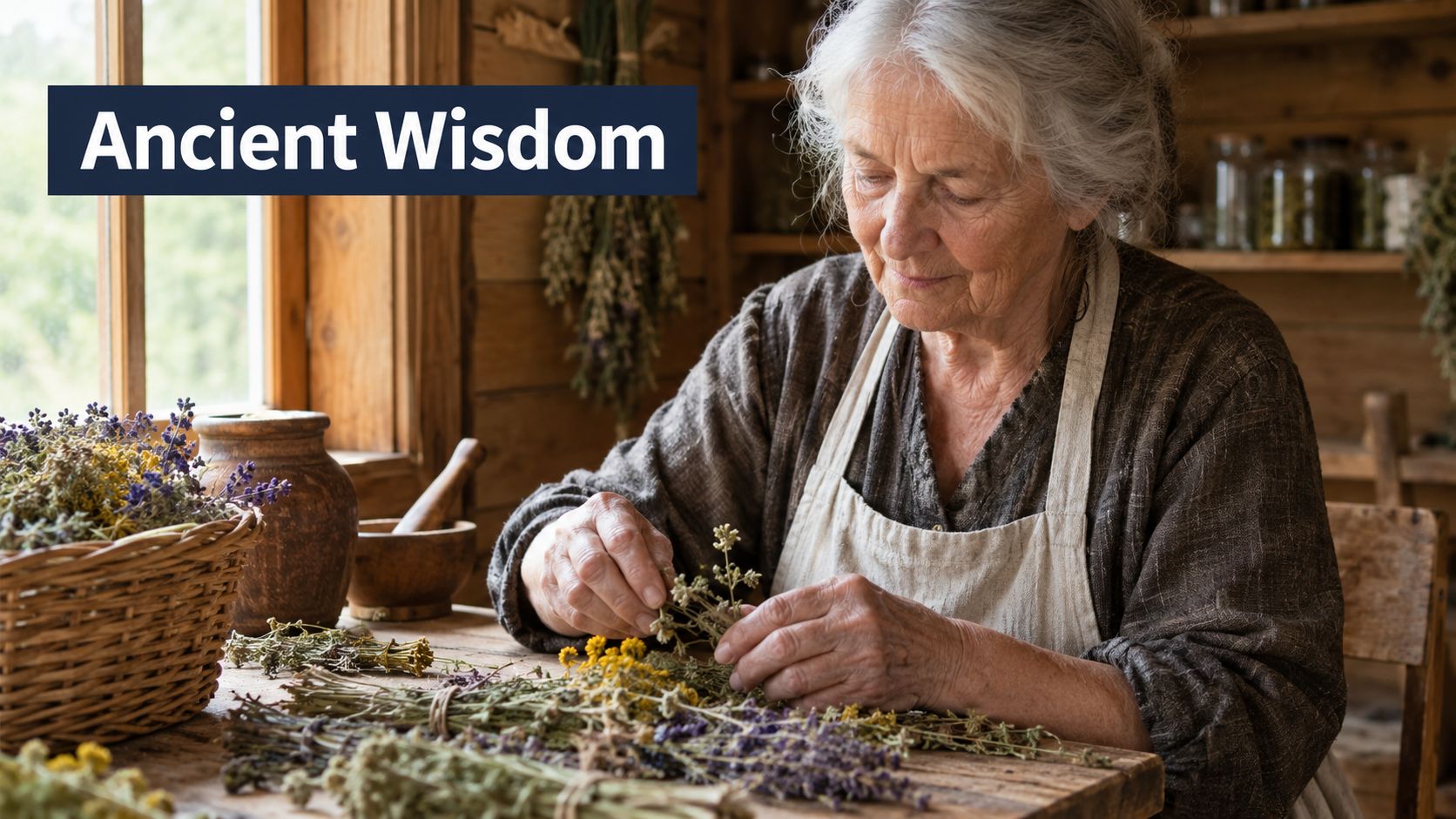
The wise woman or crone is a storytelling function that connects present choices with knowledge earned over time. She may be a healer, oracle, witch, archivist, shapeshifter, midwife, or political strategist. Her age is one possible context, not a complete personality. Granny Weatherwax shows how authority can grow from judgment and self-command, while Moiraine makes prophecy, political calculation, and personal risk part of active decision-making.
Her knowledge should have a history. Migration, apprenticeship, spiritual discipline, surviving a war, raising a family, or studying a magical tradition dismissed by institutions can all shape what she understands. This history works like a map. It shows readers where her authority comes from, which places it has not taken her, and why she interprets danger in a particular way.
Replace the stereotype with a person
A wise woman becomes more compelling when she has an objective beyond advising a younger protagonist. She might protect a sacred place, recover a lost name, or prevent a dangerous truth from becoming public. That goal can conflict with the hero's quest, forcing her to choose between guidance and interference. Her decisions should change her own circumstances, rather than serving only as lessons for someone else.
Give the role clear limits. She may know the past yet misread a new generation. Powerful magic may coexist with poor emotional judgment. Isolation can make her suspicious, and years of responsibility can make her controlling. These weaknesses define the reach of her authority. They also preserve her agency, because she must recognize what her experience cannot solve.
When writing an older female character, research on diversity and authenticity in young-adult speculative fiction supports grounding her identity in worldview, relationships, language, power, and choices. Her age, race, disability, sexuality, or other identity can affect how institutions treat her and how she understands obligation. Those details should shape the person, not decorate the archetype.
Prompt: The oldest healer in the region knows how to cure the hero, but the cure would erase the memories that make the hero who they are. Why does she recommend it, what does she fear, and what choice would change her mind?
6. The Innocent or Everyman
The innocent, or everyman, enters the fantastic world without the status, training, or assumptions that shape its established powers. Frodo begins as a hobbit from a protected community. Harry Potter learns the magical world alongside the reader, and Luke Skywalker starts far from the institutions that define his destiny.
This character creates access. Readers can learn the world's customs, dangers, and contradictions through someone who doesn't already know what a dragon treaty means or why one family controls the kingdom's spell libraries. The everyman also makes extraordinary events emotionally legible. A palace conspiracy matters because the character understands what hunger, rent, family duty, or local reputation cost before the adventure begins.
Ordinary doesn't mean empty
An innocent needs specific qualities, not a blank personality. Give them an occupation, community, habit, or practical skill that becomes important under pressure. A baker might understand supply routes. A shepherd might read weather better than a court wizard. A village caretaker might know which families will cooperate during a crisis.
Innocence should help and hinder. Trust can create alliances, but it can also make the character easy to manipulate. Curiosity can lead to discovery, but it can violate a boundary. Growth should emerge through visible practice and difficult decisions, not a sudden revelation that the character was secretly perfect all along.
The hero and the everyman can overlap, but they perform different functions. The hero is defined by central action and transformation. The everyman is defined by the contrast between an ordinary starting point and an extraordinary situation. A character can begin as an everyman, become a hero, and later reject the heroic identity others impose on them.
Prompt: Your everyman is the only person who can enter the enchanted fortress because the wards ignore people with no magical bloodline. Inside, their lack of power becomes their greatest advantage, but only if they refuse the gift offered by the fortress.
7. The Shape-Shifter
The shape-shifter changes form, allegiance, identity, social position, or self-understanding. The change may be literal, as with Sirius Black taking animal form, or social, as a character's apparent loyalties gain a different meaning over time. This type creates uncertainty because appearances cannot be trusted completely.
A shape-shifter might be an ally concealing a dangerous nature, an enemy performing kindness, or someone moving between identities because no single community accepts them. Treat the archetype as a storytelling function, not a fixed personality. A disguise can protect someone from persecution, while a magical curse may strip away their control. Those choices lead to different stories.
Make revelation earned
Plant clues before the reveal. A character might repeat a phrase linked to a hidden identity, avoid a particular spell, or know something they should not possess. The clues should reward attention without making the answer obvious. After the reveal, readers should recognize the pattern rather than feel that the story changed its rules.
Transformation also carries a cost. A shapeshifter may lose sensory information between forms, risk forgetting which identity is original, or become trapped by other people's expectations. An allegiance shift should alter relationships, not merely create a surprise. If the character betrays the group to protect a sibling, the story needs to examine both the betrayal and the protection.
The character's private experience matters when identity intersects with culture, gender, disability, sexuality, or social class. Avoid turning a complex identity into a puzzle for other characters to solve. Let the person make choices before the reveal and retain agency afterward. Their secret should complicate their decisions, not replace their personality.
The visual development of a changing character can benefit from a fantasy character art tutorial for creators, especially when clothing, posture, scars, tools, or color symbolism reflect shifts in identity. A visual reference can support the writing of costume, posture, and scar placement, but it cannot replace the emotional logic that makes the change meaningful.
Prompt: Your character has spent years impersonating the enemy's heir. When the heir returns, the character must choose between reclaiming their name and protecting the people who accepted the false one.
8. The Loyal Companion
The loyal companion gives the story emotional stability, practical assistance, and a perspective that can challenge the protagonist. Samwise Gamgee is often remembered for devotion, but his importance comes from more than staying near Frodo. He carries burdens, recognizes danger, preserves hope, and makes choices that the central quest can't succeed without.
A companion doesn't need the hero's magical ability or public importance. Their contribution might be navigation, negotiation, cooking, healing, translation, record keeping, or just the courage to tell the protagonist an unwelcome truth. Loyalty becomes dramatic when it costs something. Staying can mean abandoning family, losing social standing, revealing a secret, or supporting someone who may no longer deserve trust.
Give loyalty a boundary
The companion should want something beyond the hero's success. Ron Weasley has relationships, fears, and frustrations that don't disappear because Harry is important. An independent desire creates conflict. The companion may want to return home, join the rebellion for personal reasons, or prove that they can lead without borrowing the hero's reputation.
Let the companion disagree. They might believe the mission is wrong, question the hero's methods, or leave temporarily rather than enable destructive behavior. A temporary separation can test whether the relationship is based on mutual respect or dependence.
If you use the companion as a point-of-view character, give them access to information and emotional interpretations the hero lacks. Their perspective can show how the supposedly noble quest affects ordinary people. The most powerful version of this archetype doesn't merely ask, “How can I help?” It asks, “What kind of help will allow both of us to remain ourselves?”
Prompt: The companion can save the hero by betraying the rest of the group. The betrayal would end the war sooner, but the hero would become the ruler of the resulting regime. What does loyalty mean in that situation?
9. The Chosen One or Prophesied Hero
The chosen one is selected by prophecy, ancestry, divine will, magical design, or political interpretation. Harry Potter carries a prophecy that shapes how others see him. Rand al'Thor must confront a destiny that affects nations, while many contemporary stories question whether a prophecy identifies a savior or merely creates a target.
This type naturally raises questions about free will and fate. Does the prophecy predict a choice, cause it, or describe events that powerful people manipulate? Does being chosen create greatness, or does it place an ordinary person under impossible expectations? The answers determine whether the character feels like a person or a plot device.
Complicate the prediction
Make the prophecy incomplete, metaphorical, mistranslated, or politically useful. A line about “the hand that opens the gate” might refer to a thief, a child, or a ruler signing a treaty. Multiple groups can interpret the same words in incompatible ways, each building a different plan around them.
The chosen one still needs meaningful choices. They might accept the role while rejecting the institution that assigned it. They might fulfill the prophecy in a way no faction expected. They might refuse to become a symbol and inspire an unchosen person to act instead.
Chosen status should affect relationships. Friends may wonder whether affection is genuine. Parents may treat the child as a weapon. Enemies may attack the prophecy rather than the person. In each case, the character's emotional response creates the true story.
For a deeper approach to motivation, contradiction, and character change, use these principles for writing compelling characters.
The prophecy can shape the pressure around a character without deciding what the character will do.
Prompt: Everyone believes the prophecy names your protagonist as the world's savior. The original text names the person who will decide whether the savior should live. Who benefits from keeping that meaning secret?
10. The Rogue or Anti-Hero
The rogue, or anti-hero, survives outside respectable systems. They may be a thief, smuggler, mercenary, disgraced noble, con artist, pirate, or rebel. Their charm often comes from the gap between what they claim to value and what they do when someone vulnerable needs help.
Jaime Lannister begins with a reputation shaped by selfishness and violence, then confronts the cost of that identity. Kelsier challenges an oppressive system through methods that are charismatic, ruthless, and morally unstable. These characters make readers examine whether breaking rules is justified when the rules protect injustice.
A rogue offers a useful viewpoint on institutions. They know where laws fail, who gets punished, and which officials profit from moral language. But outsider status isn't automatically virtuous. A character can oppose an unjust system while exploiting people with less power.
Let complexity continue
Give the rogue a clear reason for distrusting society. They may have been betrayed by a court, abandoned by a guild, or punished for a crime committed by someone richer. Then give them a reason to care that creates inconvenience. A cynical thief might protect a witness, refuse to sell a child, or keep a promise that ruins a profitable escape.
Avoid making redemption the only possible arc. The rogue can remain selfish in some areas while becoming more honest in others. They can improve and still manipulate people. They can perform one brave act without becoming morally pure. Consequences should follow their choices, especially when their cleverness harms someone who trusted them.
Voice matters here. Use distinctive rhythms, sensory habits, evasions, and physical routines. A rogue who always counts exits tells the reader about fear. A rogue who never touches borrowed objects tells the reader about ownership. Small behavior can reveal more than a declaration of moral ambiguity.
Prompt: Your rogue steals a magical key from a corrupt noble, then discovers the key is also the only object preventing an innocent prisoner from dying. Returning it restores the system they hate. Keeping it makes them responsible for the prisoner's death.
10 Fantasy Character Archetypes Compared
| Archetype | Implementation Complexity 🔄 | Resource Requirements ⚡ | Expected Outcomes 📊 | Ideal Use Cases 💡 | Key Advantages ⭐ |
|---|---|---|---|---|---|
| The Hero | Medium, clear arc but risk of cliché | Moderate, sustained development and stakes | High, reader investment and plot momentum | Central protagonist-driven epics, cross-media franchises | Inspirational appeal; broad commercial reach |
| The Mentor | Medium, must avoid deus ex machina and stagnation | Low–Moderate, backstory, teaching scenes, guiding moments | Medium, stronger world-building and character growth | Coming-of-age, mentor‑apprentice dynamics, exposition-heavy plots | Facilitates exposition; adds moral authority |
| The Shadow / Villain | High, needs nuanced motive and balance | Moderate–High, layered backstory and antagonistic agency | High, tension, moral ambiguity, unpredictable conflict | Conflict-driven narratives, moral explorations, thematic oppositions | Elevates stakes; deepens thematic complexity |
| The Trickster | Medium, set clear rules to avoid gimmickry | Low–Moderate, clever plotting and sharp dialogue | Medium, unpredictability, comic relief, system critique | Satire, heist/subversion plots, boundary‑challenging scenes | Generates surprise and exposes hypocrisy |
| The Wise Woman / Crone | Medium, avoid stereotypes while preserving mystery | Moderate, lore, sensory detail, cultural grounding | Medium, mystical depth and atmospheric richness | Folklore-driven tales, magic systems, prophetic threads | Adds lore, prophetic insight, thematic resonance |
| The Innocent / Everyman | Low–Medium, pacing of growth is key | Low, relatability, gradual skill development | High, strong reader identification and natural exposition | Reader‑surrogate stories, initiation arcs, broad‑appeal fiction | Broad empathy; accessible entry point for audiences |
| The Shape‑Shifter / Transformative | High, careful foreshadowing and plotting required | High, layered clues, structural planning, multiple perspectives | High, sustained intrigue, memorable twists and reread value | Mystery, identity-focused narratives, twist-driven plots | Creates powerful revelations and thematic depth |
| The Loyal Companion | Low–Medium, needs independent goals to avoid sidekick trope | Low–Moderate, relationship scenes and parallel growth | Medium, emotional grounding and relational stakes | Ensemble casts, friendship-driven stories, emotional arcs | Humanizes protagonist; demonstrates ordinary heroism |
| The Chosen One / Prophesied Hero | Medium, balance destiny vs. agency to avoid cliché | Moderate, prophecy mechanics, stakes, interpretive ambiguity | High, clear through-line; exploration of fate vs choice | Epic quests, destiny-centric plots, subversion of prophecies | Clear stakes and marketable premise; thematic tension |
| The Rogue / Anti‑Hero | Medium–High, maintain sympathy amid moral ambiguity | Moderate, strong voice, ethical complexity, consequences | High, moral complexity and reader debate | Gritty, political, or system‑critiquing narratives | Compelling ambiguity; unpredictable and engaging presence |
Build Characters, Not Just Archetypes
An archetype gives you a useful starting position, not a finished character. Begin by assigning a narrative function. Decide who creates movement, who supplies knowledge, who exposes hypocrisy, who offers emotional grounding, and who embodies the central threat. Then separate that function from species, magical ability, social identity, and moral alignment. An elf can be a villain, a human can be a magical helper, and a dragon can be a loyal companion or a political ruler.
The most interesting combinations create productive friction. A mentor can also be a rogue who teaches through manipulation. A chosen one can be an innocent who rejects public greatness. A loyal companion can secretly be the shadow because their devotion to the protagonist has become destructive. A wise woman can serve as the story's trickster, using prophecy to make powerful people reveal themselves.
Give every major character a private desire that the plot doesn't announce. The hero may want forgiveness rather than victory. The mentor may want to die having corrected one old mistake. The villain may want someone to remember them as a protector. The companion may want permission to leave. A private desire creates behavior that isn't reducible to the character's assigned role.
Pair that desire with a contradiction. A character who values freedom might control everyone around them. Someone who fears becoming a monster might use monstrous methods. A person who wants justice might protect a family member who committed a serious wrong. Contradictions generate choices, and choices reveal character more reliably than descriptions.
Use the prompts in this guide as pressure tests. Don't copy them as plot summaries. Ask what the character wants, what they believe they deserve, what they refuse to admit, and what consequence they accept when two values become incompatible. A character becomes original when their history, relationships, limitations, and decisions produce a combination readers haven't encountered in exactly that form.
Fantasy character systems also benefit from a representation check. A diverse character shouldn't exist only to signal virtue, provide trauma, or educate other characters. Culture, disability, gender, sexuality, religion, language, geography, and access to magic can influence a person's worldview and options, but none of these dimensions should erase individual agency. Research into young-adult fantasy reviews found that diverse protagonists and major secondary characters were underrepresented, while reviewers also underreported racial and ethnic diversity. The study on representation in YA speculative fiction supports a more careful approach, one that prioritizes authentic complexity over surface inclusion.
Use this revision checklist before you call the cast finished:
- Name the function: Can you explain what this character does for the story beyond their job or species?
- Challenge the expectation: What would this archetype normally do, and why might your character refuse?
- Preserve agency: Does the character make consequential choices, or do other people use them as tools?
- Track the cost: What does the character lose, risk, or damage through their decisions?
- Change the story: Would the plot, relationships, or moral question change if you removed this character?
A manuscript may need more than strong characterization. Authors often need developmental editing, line editing, cover design, interior layout, publishing guidance, or help preparing a book for readers in different markets. BarkerBooks is one option for authors seeking that broader support, including editorial services, production assistance, publication guidance, and worldwide distribution.
Your archetypes are only the framework. The finished character comes from the specific history that shaped them, the relationship they can't escape, the limitation they resent, and the difficult choice they make when no available option leaves them unchanged.
If your fantasy manuscript has strong archetypes but needs deeper characterization, BarkerBooks can help with editing, cover design, formatting, publication, and worldwide distribution. Visit BarkerBooks to explore professional support for turning your characters and completed story into a finished book.