
At the widely cited benchmark, audiobook narration costs about $200 per finished hour, with another $200 per finished hour for editing, quality control, mixing, and mastering. A 10-hour audiobook therefore implies roughly $4,000 in combined production work, before pickups, premium talent, or other services.
That headline figure is useful, but it isn't a complete quote. Authors get into trouble when they compare a narrator's PFH rate with a producer's flat package without checking what each price includes. The fair question isn't, “What does narration cost?” It's, “What finished product will I receive, which work is included, and who pays when the manuscript needs another pass?”
Audiobook recording rates reflect several different pricing systems. Human narration, post-production, union agreements, royalty arrangements, and synthetic voices can all produce radically different invoices. The sections below give you a practical way to compare them, identify omitted line items, and choose a structure that matches your book's commercial risk.
The Three Pricing Models Every Author Should Know
A quote means very little until you know which unit the producer is measuring. Audiobook professionals generally use three models: per finished hour, per recorded hour, and a flat project fee. They aren't interchangeable, because each transfers a different kind of risk to the author or producer.
| Model | What It Measures | Best Fit For | Risk to Watch |
|---|---|---|---|
| Per finished hour | The final mastered runtime | ACX-style auditions and standard narrator quotes | Extra revisions, pickups, and exclusions |
| Per recorded hour | Time spent recording in the booth | Studio sessions and engineer-supported production | Retakes and inefficient sessions increase cost |
| Flat project fee | One negotiated price for the complete book | Indie producer packages and clearly defined scopes | Vague deliverables can hide later charges |
Per finished hour
Per finished hour, or PFH, charges according to the length of the completed audiobook. If the mastered files run for 10 hours, the narration portion is priced against those 10 hours, regardless of how long the narrator spent recording them.
This model works well for ACX-style auditions because authors can compare offers against the same expected finished runtime. It also protects the author from paying more merely because a narrator needs additional takes or a producer works slowly. The quote still needs careful review, however. Some PFH offers cover narration only, while others include editing, proofing, mastering, and delivery-ready files.
Per recorded hour
Per recorded hour measures booth time, not published runtime. It includes the hours spent reading, correcting mistakes, repeating lines, and taking breaks between sessions. This approach can make sense when an author hires a studio, particularly if the author is narrating and needs an engineer in the room.
The danger is obvious. A difficult manuscript, inexperienced narrator, or performance-heavy project can require more session time than expected. Ask whether the estimate includes retakes and whether the engineer's time, studio rental, and post-production are separate.
Flat project fees
A flat project fee bundles the book into one negotiated number. Indie producer packages often use this structure because it can combine casting, direction, recording, editing, mastering, quality control, and delivery.
A flat fee is only safer when the scope is written down. Check the expected runtime, number of proofing rounds, pickup policy, file specifications, music or sound design, and delivery schedule. For unfamiliar terms, find audiobook terminology in a practical glossary before signing.
Practical rule: Never compare two prices until you know whether both quotes measure finished audio, recording time, or the entire project.
Union SAG-AFTRA Audio Code agreements use their own contractual terms, including applicable minimums, benefits, and working rules. Treat those agreements as a separate labor framework rather than assuming a union quote is directly comparable to a freelance PFH offer. Your first task is simple: identify the meter running behind the number.
What the $200 Per Finished Hour Benchmark Really Means
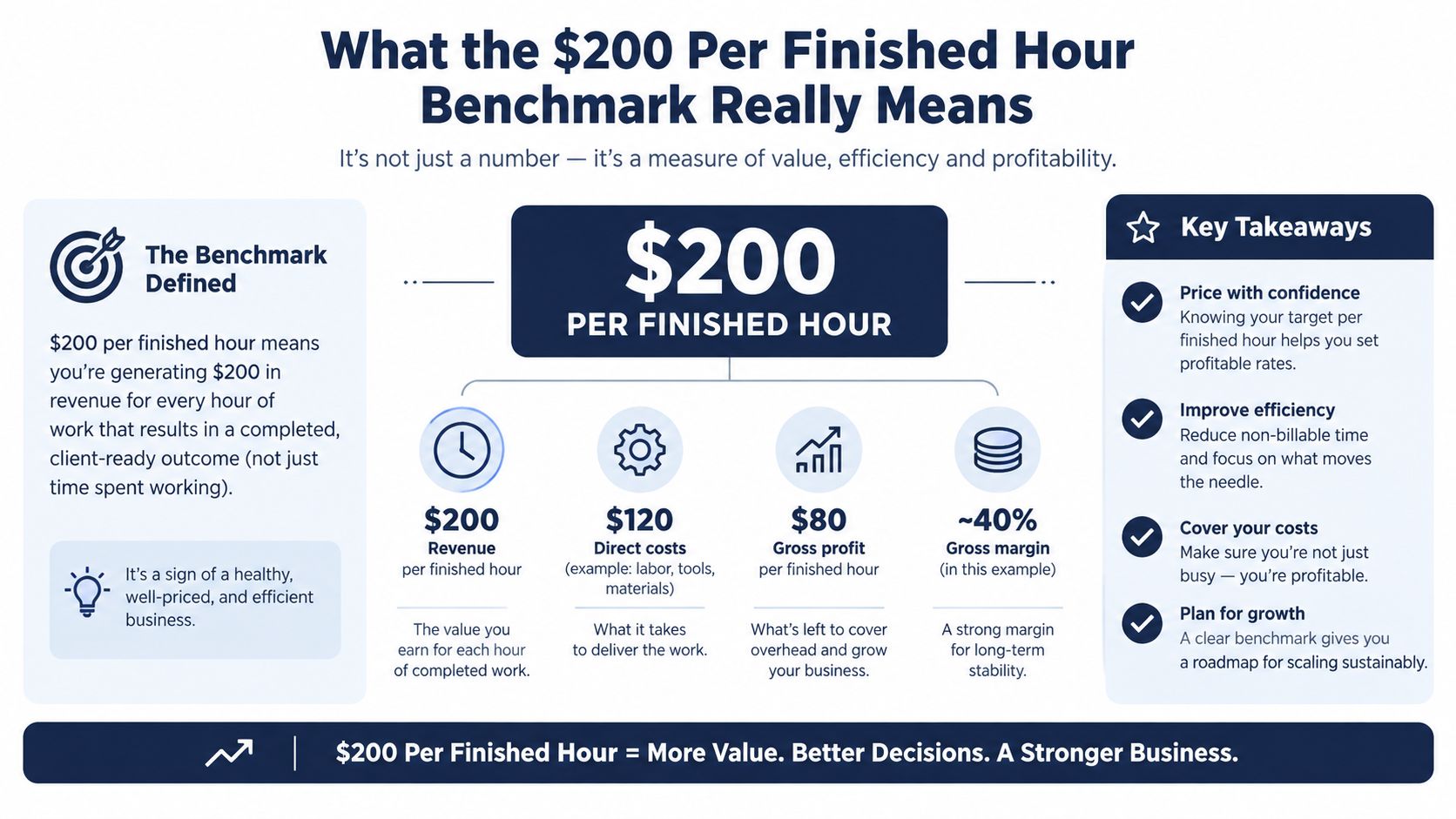
The $200 PFH benchmark for narration is a planning anchor, not a guaranteed market quote. A comparable additional $200 PFH often covers editing, quality control, mixing, and mastering, according to ACX's audiobook payment guidance. Together, those figures show why a narration quote alone can understate the cost of a finished release.
A 10-hour budget
For a 10-hour finished audiobook, the arithmetic is straightforward:
- Narration: about $2,000 at $200 PFH.
- Post-production: about $2,000 at another $200 PFH.
- Combined production work: roughly $4,000 before extra services, pickups, revisions, or premium talent.
The PFH method exists because the finished runtime gives both parties a consistent budgeting unit. ACX notes that producing one finished hour can require about four hours of work, so a 10-hour audiobook can imply roughly 40 labor hours across the production process. The author pays for the usable result rather than every minute spent in the booth.
The final runtime also matters more than page count. A short page with dense dialogue, pronunciation challenges, or frequent scene changes can demand more attention than a visually longer but simple page. That is why a producer should estimate from the manuscript and explain assumptions before issuing a firm price.
Why the benchmark moves
Industry guides show wide variation. Beginner and lower-budget projects may fall around $50 to $100 PFH, mid-range work often sits around $200 to $400 PFH, and union or top-tier professional work can reach $250 to $450 PFH or more, as outlined in VoiceCrafters' voice-over rate guide.
The $200 figure is useful because it gives an author a realistic midpoint for planning. It isn't a promise that every narrator, genre, language, or production package will land there. Compare the deliverables first, then compare the rate.
The production distinction is also explained through BarkerBooks' unabridged audiobook resource, which helps authors think about the finished format rather than narration as an isolated service.
A visual explanation of the benchmark can make the cost split easier to communicate to co-authors, publishers, or investors.
Rate Ranges by Narrator and Producer Level
Price tiers reflect more than vocal quality. They also reflect direction, preparation, consistency, editing discipline, and accountability when something goes wrong. A lower quote may be perfectly suitable for a low-risk project, but only if you know what work remains outside the quoted rate.
| Tier | Narration PFH Range | Typical Services Included | Best Fit For |
|---|---|---|---|
| Beginner or lower-budget | $50 to $100 PFH | Narration, with editing often separate | Shorter or lower-risk projects |
| Mid-range professional | $200 to $400 PFH | Narration, with production services negotiated or bundled | Commercial releases needing reliable execution |
| Union or top-tier professional | $250 to $450 PFH or more | Professional performance under higher-end terms, with benefits or contractual rules where applicable | High-stakes titles and demanding performance work |
Beginner and lower-budget work
Newer narrators may offer attractive audiobook recording rates because they're building credits, samples, and workflow experience. The trade-off is often less predictable delivery. Editing, proofing, mastering, pronunciation preparation, or pickup sessions may sit outside the headline price.
That doesn't make a beginner unusable. A straightforward nonfiction title with a clean manuscript may be a sensible training-ground project. Ask for a representative sample, confirm who performs quality control, and require a short test section before committing to the whole book.
Mid-range production
Mid-range professionals usually provide a stronger balance between cost and execution. Their value often comes from dependable pacing, character differentiation, cleaner recording technique, and a repeatable post-production process.
Don't assume that a mid-range PFH quote includes every deliverable. Ask whether it covers proofing against the manuscript, removal of mouth noise, mastering, file naming, retail specifications, and one or more rounds of pickups. A producer who explains these items clearly is easier to budget than one who just advertises a low number.
Union and top-tier talent
Union or top-tier work can justify a higher rate when the book depends heavily on performance, character work, or a recognizable voice. Union arrangements may include benefits, pension and health contributions, overtime rules, and other contractual requirements. Those costs aren't interchangeable with a freelancer's cash PFH quote.
The right decision depends on the book's commercial stakes. Don't pay for a premium name merely to decorate the cover, but don't hire the cheapest available voice for a title whose sales depend on sustained dramatic performance.
How Region and Language Shift the Numbers
Audiobook recording rates don't travel cleanly across borders. A quote reflects local labor markets, studio access, language expertise, union rules, accent requirements, and the producer's ability to manage remote collaboration. A lower regional rate isn't automatically a bargain if translation, pronunciation coaching, or additional direction gets added later.
The clearest comparison is between the service included and the audience served. A Spanish-language audiobook may need more than a fluent reader. It may require regional casting, adaptation of names and terms, and a voice director who understands the intended market. An English narrator with the right genre experience may cost more than a technically fluent alternative because the performance carries the book's positioning.
| Region / Language | Non-Union Range (PFH) | Union / Top-Tier Range (PFH) | Typical Notes |
|---|---|---|---|
| United States, English | $200 to $400 PFH | $400 to $750 PFH plus benefits | Rates vary by experience, genre, and agreement |
| United Kingdom, English | £150 to £250 PFH | Around £300 to £400 PFH | London-based union talent can set a higher ceiling |
| Spanish-language production | $100 to $250 PFH | Premium bilingual work can exceed $350 PFH | Accent authenticity, translation, and direction may be separate |
What to ask about language work
Clarify whether the manuscript has already been translated. Translation is not a narration task, and a narrator shouldn't be expected to repair awkward source text while recording. Request a pronunciation guide for names, locations, technical terms, and brand references.
Regional fit matters, too. A general Spanish-language quote may not tell you whether the voice is intended for Latin American, European, or a specific national audience. Ask the producer to identify the accent target and to provide a sample using your actual text.
A language match gets the project started. A market-appropriate performance makes the recording usable.
Also check rights administration. If you commission multiple language editions, make sure the contract states which territories, formats, and promotional uses are included. One low PFH quote can become an expensive project if the author later discovers that adaptation, casting, or distribution preparation was never part of the scope.
AI, Royalty Share, and the New Pricing Landscape
AI narration looks inexpensive because the invoice measures generation, not necessarily commercial readiness. Current estimates place some AI-narrated or hybrid full-length novel productions as low as $15 to $80, while human narration commonly remains in the thousands for a standard 80,000-word book, according to Alpacaa Authors' audiobook production guide.
That gap is real. It doesn't prove that AI is the right choice.
AI production
Synthetic narration can reduce recording labor and may suit internal listening, accessible drafts, or projects where performance is not the primary selling point. The author still needs to inspect pronunciation, emphasis, pacing, character differentiation, file quality, and rights to the generated voice.
A licensed voice clone can create a different cost structure from a standard synthetic voice. The contract should state who owns the voice model, where it can be used, whether the license is limited by territory or format, and what happens if the service changes its terms.
Royalty share
Royalty share shifts the upfront cost to the narrator. The author may pay nothing at signing, while the narrator accepts a share of future earnings instead of receiving the full production fee immediately. The arrangement only works when both sides understand the royalty base, accounting, payment schedule, rights term, and distribution restrictions.
ACX has announced a move away from its legacy royalty model toward a pooled Member Value model, which may change how authors and narrators assess royalty-share and upfront PFH agreements. Read the current platform terms before relying on an older contract template.
| Pricing Path | Upfront Cost to Author | Typical Per Book Range | Key Trade-Off |
|---|---|---|---|
| Human narration with production | Paid before release | Thousands for a standard full-length title | Higher cash cost, clearer ownership of the deal |
| Royalty share | $0 at signing may be possible | Ongoing share of royalties | Lower cash risk, long-term payout and rights obligations |
| AI or hybrid production | Low-cost options exist | About $15 to $80 for some full-length productions | Lower production spend, greater performance and licensing review |
The right comparison is not “human versus AI.” It's cash outlay versus audience fit, rights control, and revenue risk. A cheap master that listeners abandon won't protect the author's investment.
Hidden Costs That Quietly Inflate Your Budget
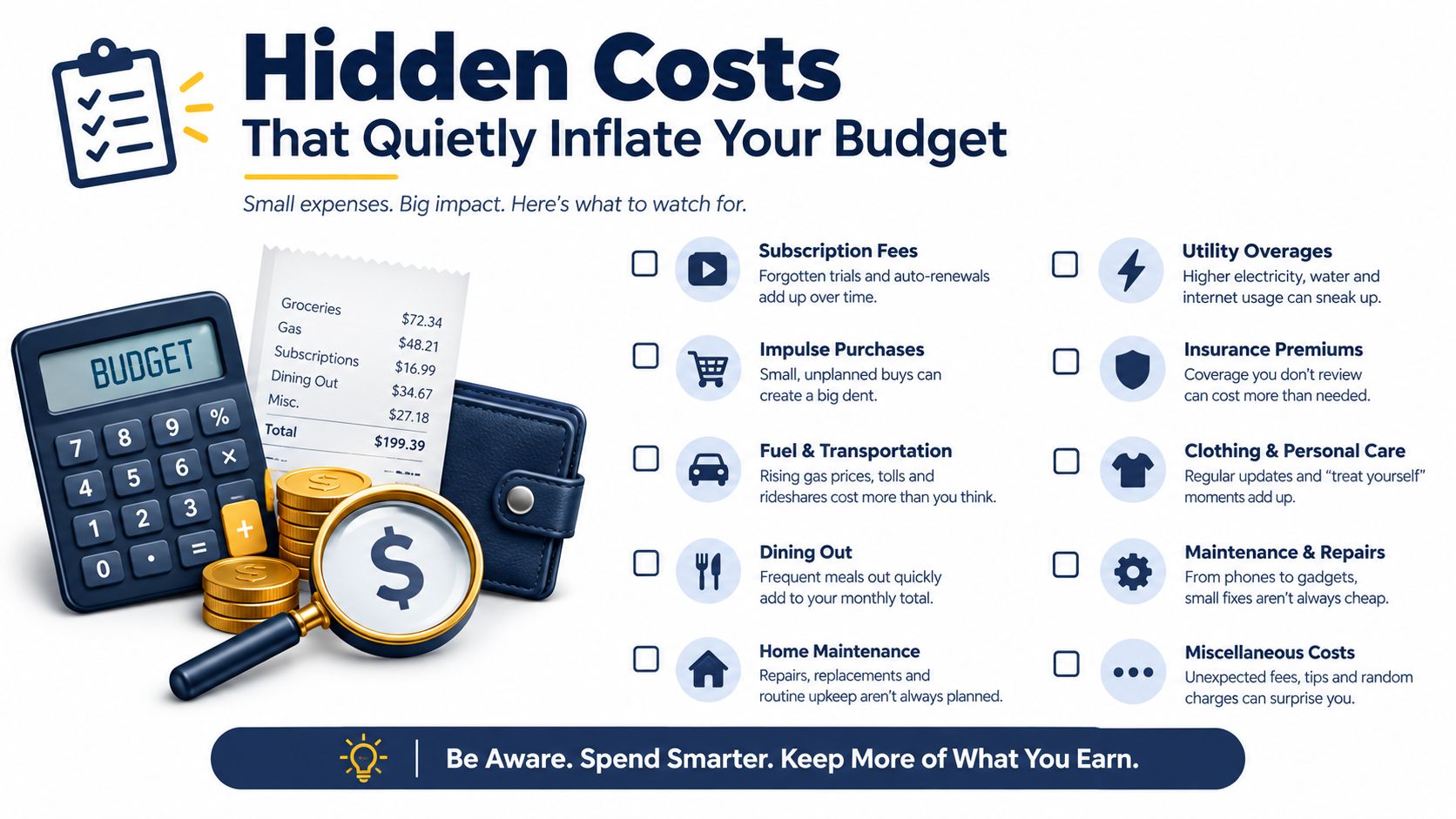
Most inaccurate audiobook budgets fail in the same place. They quote narration, then treat every other production task as an afterthought. Your request for proposal should separate the following line items before you compare vendors.
Production items to identify
- Pickups: Corrected sentences, mispronunciations, and continuity fixes may require separate sessions. Ask whether a reasonable number of pickups is included.
- Proofing: A proofing pass checks the audio against the manuscript. Confirm whether the quote includes one pass and what additional rounds cost.
- Mastering: Retail-ready audio needs consistent levels, clean room tone, suitable peaks, and the required file format. Confirm whether mastering is bundled or priced separately.
- Quality control: QC should cover missing audio, repeated lines, clicks, edits, bad file breaks, and narration errors, not merely whether files exist.
- Project management: Casting, scheduling, file tracking, approvals, and delivery can appear as an administrative fee rather than a production line.
- Script preparation: Pronunciation notes, rewritten charts, removed page references, and performance markings can add editorial labor before recording.
- Samples and cover assets: Audio samples, retail clips, and square cover preparation may fall outside the core recording quote.
- Distribution preparation: Metadata, file naming, retailer specifications, and upload assistance should be stated explicitly.
The BarkerBooks audiobook production services page is one example of how a publishing provider may frame audiobook work as a broader production service rather than narration alone. Use that distinction when requesting quotes from any provider.
The quote audit
Ask each vendor to mark every item as included, excluded, or available at an additional rate. Then ask what triggers a revision charge. A manuscript correction made before recording should be treated differently from a new paragraph supplied after mastering.
Don't accept “standard delivery” as a sufficient description. Require the file format, naming convention, QC responsibility, pickup window, approval process, and ownership terms in writing. Those details determine whether the price represents a finished audiobook or only a voice track.
Set aside a contingency for unknowns. The amount should reflect the manuscript's condition, narrator complexity, and approval process, not a generic percentage copied from another project. A clean, final script has a different risk profile from a changing manuscript with multiple points of view.
Choosing the Right Model for Your Book and Budget
Choose the payment model after answering four questions: How much cash can you commit? How demanding is the performance? What rights do you want to retain? Which distribution path will carry the book? The lowest upfront number isn't automatically the lowest-cost decision.
| Author Profile | Recommended Model | Typical Cost | Trade-Off |
|---|---|---|---|
| First-time author with limited cash | Royalty share, if available and contractually suitable | $0 at signing may be possible | Long-term royalty obligation and limited narrator availability |
| Established author with reliable sales history | PFH or flat fee | Negotiated against scope and runtime | Higher upfront spend, clearer budget control |
| Performance-heavy fiction author | Experienced or union talent | Higher than a basic freelance quote | Better fit for character and direction demands |
| Author testing AI or hybrid production | AI or hybrid | Some full-length options cost $15 to $80 | Requires careful quality, licensing, and audience review |
| Publisher or managed-service client | Bundled production package | Depends on final scope | Convenient, but exclusions need scrutiny |
A romance, thriller, or science-fiction book can place greater demands on a narrator than a straightforward business title. Multiple characters, accents, emotional shifts, and continuity requirements increase the value of direction and QC. A simple read may tolerate a leaner package, while a performance-led novel needs a producer who can maintain consistency across the entire recording.
Royalty share deserves special caution because platform economics are changing. ACX's shift away from its legacy royalty approach toward Member Value means that authors shouldn't assume an older royalty-share arrangement remains available or behaves the same way. Review current terms, understand the accounting base, and calculate what happens if sales are slow.
Use a practical decision filter
- Set the cash ceiling. Decide whether you can fund production before revenue arrives.
- Rate the performance complexity. Count characters, viewpoints, technical vocabulary, and required accents.
- Define rights preferences. Clarify exclusivity, territories, voice licensing, and contract duration.
- Choose the distribution route. Match the production agreement to the retailers and platforms you intend to use.
- Compare all-in quotes. Put narration, editing, mastering, QC, pickups, and delivery on the same worksheet.
A 10-hour business audiobook priced at $250 PFH for narration plus $200 PFH for mastering produces a planning figure near $4,500, before any other services. Those rates are illustrative of the pricing arithmetic, not a guaranteed quote. A royalty-share deal may reduce the initial payment but create a continuing obligation, so choose according to cash-flow tolerance and rights strategy rather than headline savings.
For authors managing their own workflow, BarkerBooks audiobook recording software guidance can help frame the technical side of the production decision. Software doesn't replace a narrator, editor, or QC process, but it can clarify which tasks you're taking on yourself.
If you're preparing a manuscript for production, ask BarkerBooks for an itemized audiobook proposal covering narration, editing, mastering, QC, distribution preparation, and revision terms. Visit BarkerBooks to discuss your book's scope and receive a quote built around the finished product, not just a headline PFH rate.